
Lesson 3 is about finding CEOs through the affiliations of your members.
In this Lesson we want to leverage the affiliations CEOs may have with each other in your specific communities on governmental committees, civic boards and commissions, and non-profits.
We’re going to use a technique Brad and I leverage in our Executive Search Practice and one that we teach in our hiring program "You're NOT the Person I Hired" to the Vistage/TEC community. We are going to use “one-degree” of separation to get to our ideal CEO prospect.
We’re going to search on LinkedIn for all the CEOs who are on the boards of these local organizations. First, we’re going to make a list of the organizations (Mayor’s Business Council, Yale School Business Advisory Committee, Make a Wish Foundation, Vancouver Educational Enrichment Board, etc.). Our first step is to review the affiliations of the CEOs in our existing group.
Here's an example spread over the next 3 screen shots:
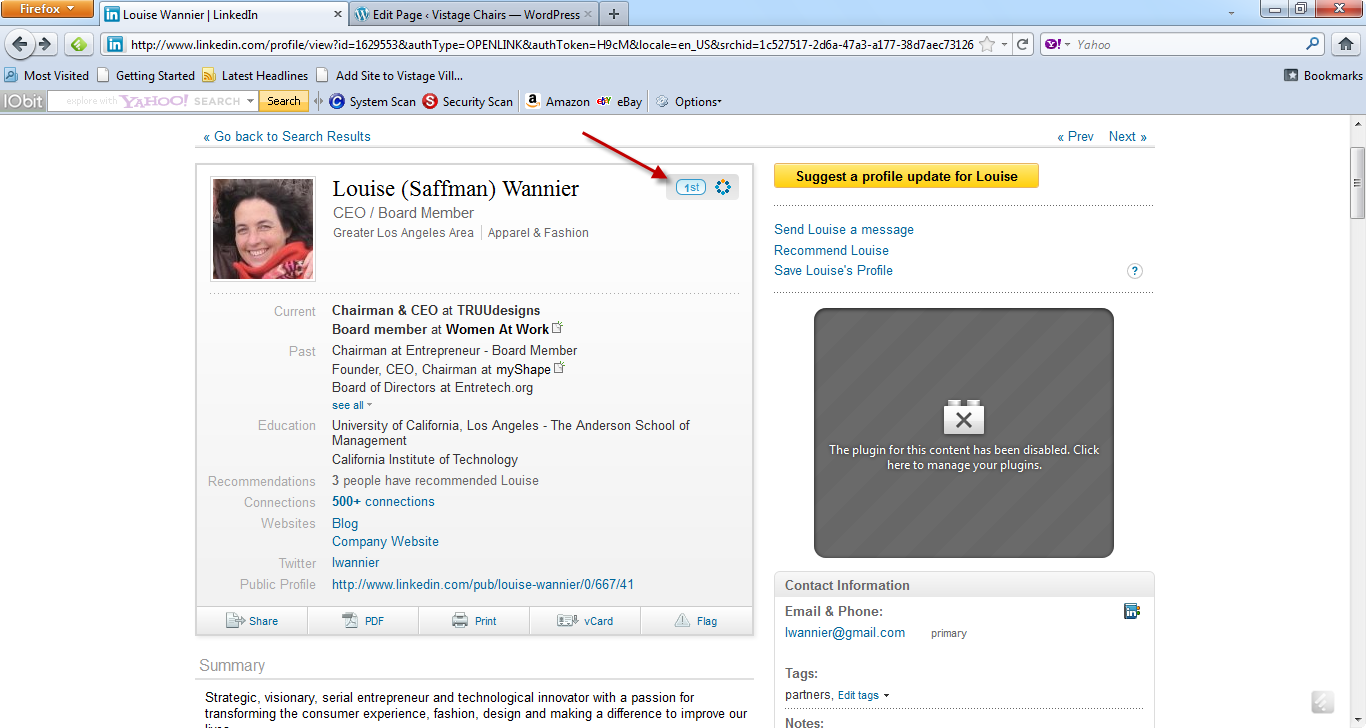
One of my direct connections is Louise Wannier, a former client. Louise is on the Board of Directors of an organization titled "Women at Work". I discover her affiliation by looking through her profile at the organizations she's listed. I can then click on the organization's hot linked name on Louise's profile. I am then taken to another page which lists anyone who has inserted this same organizational name on their profile. I can look both at who I am connected to at the organization and I can see who the employees are listed on LinkedIn.
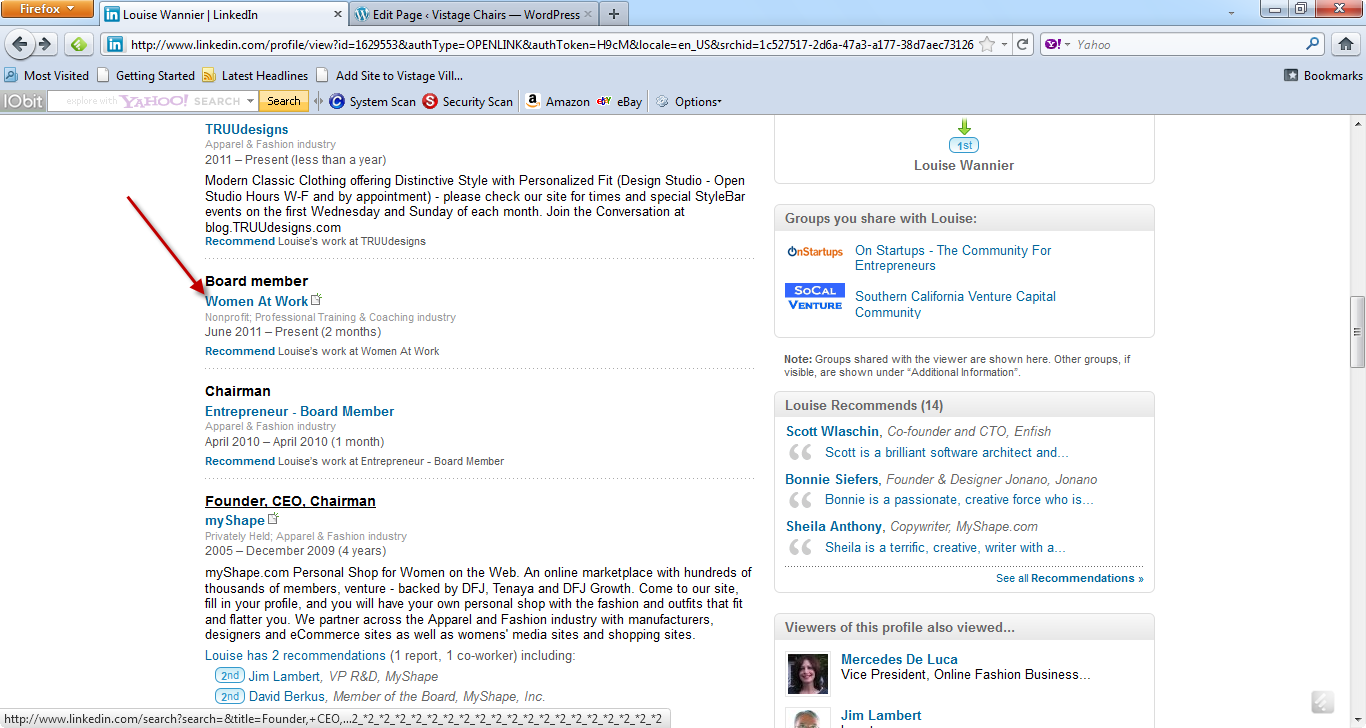

Notice the listings of Sam Gennawey and Pixie Boyden as Board Members. I would then click on each of their links to view their profiles to see if they might be appropriate potential CEO candidates for my group. If so, I could then cycle back to my member - Louise Wannier - and ask her for a personal referral to these two individuals.
The assumption (one-degree of separation principle) is that similar CEOs will flock together and can be found in one place. If I can identify one or two CEOs on the Make a Wish Foundation Board in Pasadena – especially if one of your Members or Trusted Advisers is on that Board or in an Officer role - then it’s very likely they will lead you directly to 2-3 other CEOs on that same Board/Committee/Executive Team.
Once we've moved past reviewing the affiliations of our members, the next step would be to start conducting specific ADVANCED searches on organizations in your specific geography looking for CEOs who are members or Officers on the Board of Director. We can refine our search by title and keyword. In the example below, I am searching on the Make a Wish Foundation of Los Angeles. You can see the Advanced Search criteria on the right side of the screen shot. Notice the 3 potential CEOs who list the Make a Wish Foundation on their profiles. You might then click each of their profiles to see who in your network knows those CEOs and who might be able to provide a personal referral and introduction to you.
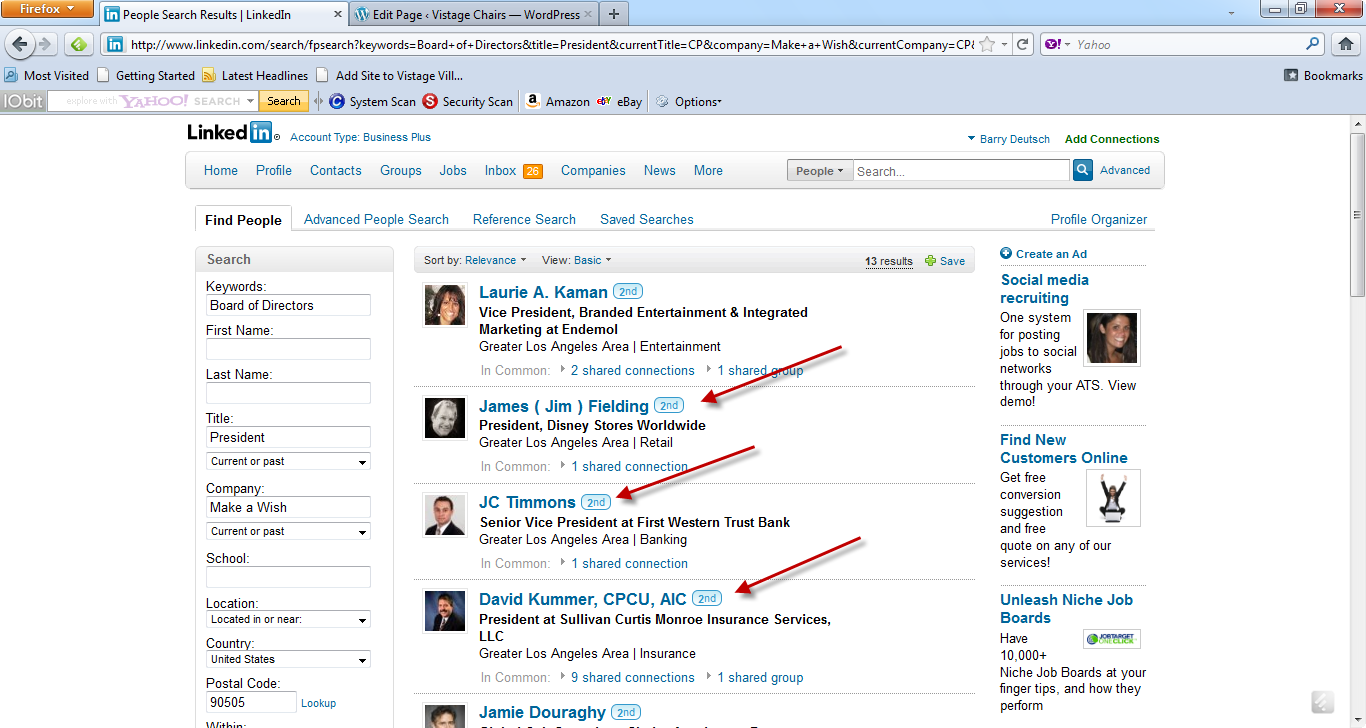
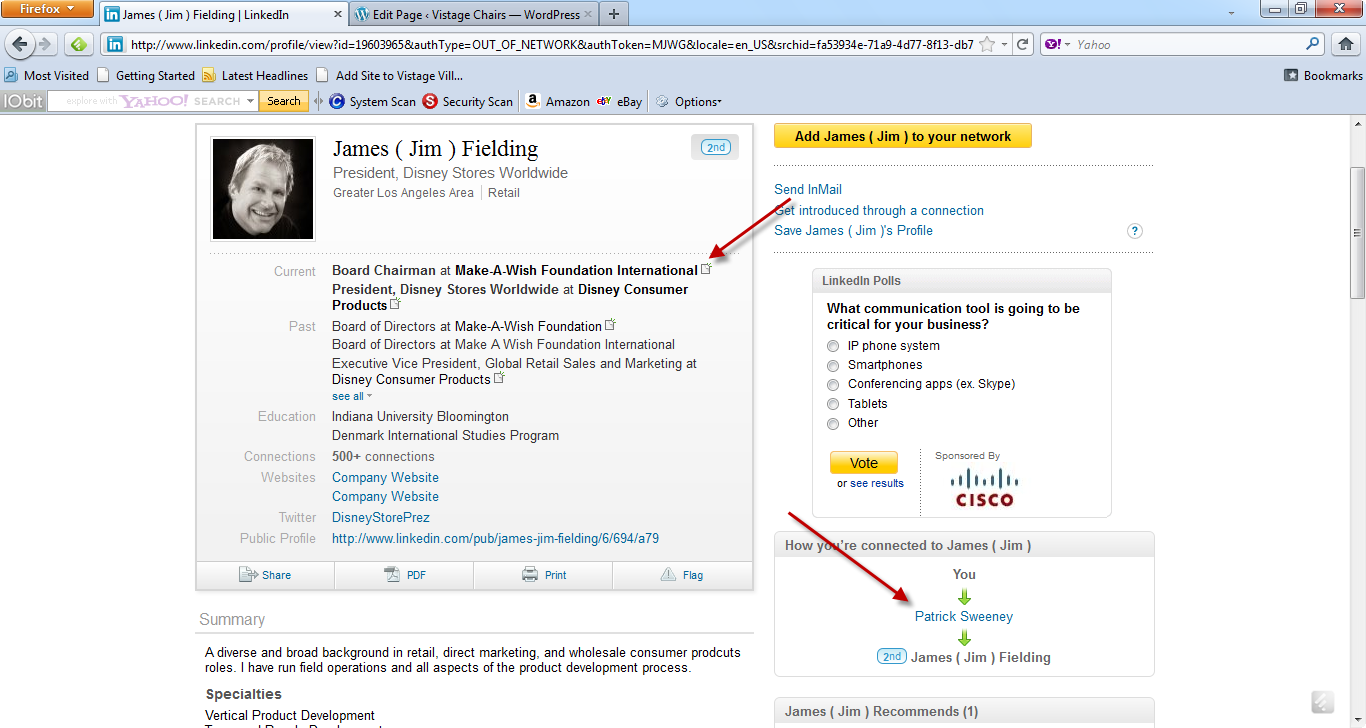
Notice that Jim Fielding appears in our list. We click on his profile and discover he's the Chairman of the Board of the Make a Wish Foundation and I am connected directly to him through a network contact named Patrick Sweeney. I would then want to find out how well Patrick knows Jim and whether it would be appropriate to ask for a personal referral.
Here's an interesting question for networking and referrals: Do you know the affiliations of all the CEOs in your network. Do you know which ones are just members of organizations and which ones hold Board/Officer roles? The best time to ask this question might be in your next one-to-one. Let's pretend for a moment that Bob in your group is on the local board of the Community Arts Foundation in Cincinnati. You discover on LinkedIn that there are 3 other CEOs on that same Board of Directors. The question going through your mind might be: Why has Bob not referred his fellow Board level CEOs to me yet?
However, this is precisely the problem when most people ask for referrals from their network. MyPartner, Brad Remillard, and I discovered this issue decades ago in our Executive Search Practice. We would ask "Do you know someone who might be interested/open for ..." This usually triggered a response in the person being asked for the referral of "Gee, I don't know anyone needing whatever it is your pitching." 20 years ago, Brad and I stopped this silly and ineffective method of asking for referrals. A much better approach is to be very precise in your request, such as "Bob, I see that you're on the Board of the Make a Wish Foundation in Chicago. It's come to my attention that there are two other CEOs on that Board, John X and Paul Y, who potentially might be good members of our group. Would you be open to introducing me to each of them?"
Most individuals provide very few referrals on their own. They're just not wired to think constantly about providing referrals to others. It almost occurs on a random and infrequent basis. You can trigger a high volume of referrals by making your requests specific. LinkedIn provides the vehicle to enable warm-to-hot referrals.
Once you start connecting to CEOs who are on public boards, committees, and commissions, you’ll notice they list these affliations on their profiles. The name of the organization will be a hot link to the actual organization. When you click on the link it will show you other people who have listed that link (organization) on their profiles. Most individuals are probably very proud of their affiliation/membership and leadership in these non-profit/civic/trade organizations and display them on their profile like a badge of honor.
We want to connect to these individual through our mutual network contacts since they will open up another door of potential contacts. Most influencers/connectors in your network will be "joiners". Their peers will ask them to participate on the Boards of Commissions, Agencies, Non-Profits, and other Civic organizations.
Lesson 3 Action Steps
- The Make A Wish Foundation of Houston
- United Way of Rochester
- The Zoning Commission of St. Louis
- Junior Blind Society of Los Angeles
- The San Francisco Chapter of the National Flour Distributors Association
Lesson 3 Discussion Topics
1. What did you discover when you looked at the affiliations of your existing CEO Members and TAs?
2. Did this provide you with a starting list of potential community-based organizations?
3. What did you find to be the best source of information for pulling together a list of community-based organizations with boards of CEOs and Presidents?
4. As you started to search on these community-based organizations for CEOs, Presidents, and high level TAs – was your existing network wide and strong enough to show 1st or 2nd degree connections to these potential members?