Improved Navigation for the Chair e-Course Lessons

Chair e-Course Sidebar Lesson List

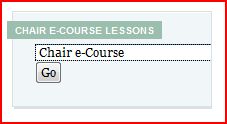
I've added a little "widget" in the sidebar on this blog to improve navigation through the various lessons of the Chair e-Course on Leveraging Social Media to Find Members. Apparently on some computers, the lessons after number 11 or 12 appear almost transparent or in a white-out - making it difficult to see them.

You'll see the new widget in the sidebar right between the RSS subscription icon and the categories list. It's titled Chair e-Course Lessons.

Click on the one line box below the widget title which says Chair e-course.

Upon clicking in that box - all the Lesson Pages will appear in a drop down.

Select the page you are interested in reading

Click the go button and the page will appear

To return to the front or home page simply click the home button at the top navigation bar in the far left corner

Barry Deutsch

What Blogging Platform-Service Should I Choose?

Which Blog Platform Should I Choose?

I wanted to share this article I came across the other day by a blogger who goes by the unusual handle of Blogelina.She wrote a comparison article on which blogging platform to use. We’re going to get into blogging in later lessons in our e-Course.

I don’t necessarily agree with the author’s recommendation that if you’re not going monetize your blog, then choose blogger. My recommendation would be to start with WordPress from the very beginning. I would also recommend installing WordPress into your own domain name site (I assume you’ve already registered your personal site). There are many virtual consultants that can help you handle the technical elements of blogging. I pay $50/month to a WordPress blog consultant in England to handle my technical needs that exceed my knowledge or willingness to invest my personal time. We occasionally get on a Skype call if there is something we need to discuss. Most of our communication is through email.

Regardless of my personal perspective that I think you should start with your own installation of wordpress on your site  - primarily since it’s a pain in the you-know-what to convert at a later point if you want to switch all your existing content to another platform/service – this is a good article in table form that shows the differences between the major blogging platforms.

If you are interested in blogging as a hobby and not necessarily for profit, and you don’t want to mess with any technical aspects, I would recommend Blogger.  However, if at any point in your blogging career, you think you might want to blog for profit, I would highly recommend WordPress.  It is considered to be, hands down, the best blogging platform out there for creating and maintaining a unique and profitable blog.

To read the full article by Blogelina, please click the link below:

Blogging Platform Comparison Chart

Barry Deutsch

Stop Sending Generic Invitations on Linked

On-line Connection Request

Susan Avello, writing on Kyle Lacy’s Blog, wrote a post about her frustration receiving generic LinkedIn Connection Invitations. Here is what Susan said in her post:

It literally sends me over the edge when I get these requests. Why, you say? Because if you can’t take a few seconds to delete what’s already written in there and tell me why you would like to connect with me, how connecting with me is beneficial for both of us, what common interests we share, or just say a quick hello or tell me a joke – then I don’t need to connect with you!

What it tells me is that you will more than likely be trying to sell me something, sending me all your blog posts, or something to that affect and not engaging with me on a personal or business level and I don’t have time for that.

I’m in complete agreement. Here’s what I responded back to her with in a comment on the blog post:

You are exactly right about sending connection invitations. I delete all the ones that use the generic phrase. My attitude is the same as yours - if you cannot take a moment to craft a message of how we know each other or why we should connect - your not worth my time.

We’ve been talking a lot about increasing your on-line network and connecting to others, including your members and high level trusted advisers. As you start to connect to folks that might not remember you from an event, or don’t know you very well, it’s critical that you craft a short message indicating how you know the person and why they should connect with you. The more personal the invitation, the higher the probability, the person will respond by pressing the “ACCEPT” button.

To read Susan’s full blog post, please click the link below

Stop with your Stupid and Generic LinkedIn Invitations

Barry Deutsch

Do You Insult the People Who Matter the Most To You?

Here's a little reality check from all the digital interaction we've been talking about in this e-course. Once you get sucked in and connected, do you insult the people who matter the most to you?

How many times have you met with someone and their iphone, ipad, or any of the other latest digital devices are more important than connecting visually with you and being focused on you as a person vs. "multi-tasking". How many times have you stood there and ground your teeth while the other person puts you on hold because of a phone call, facebook message, or alert buzzing on their ipad?

I'm rapidly coming to the conclusion that multi-tasking is basically disrespect in the presence of other human beings.

Scott Ginsberg published an interesting article on his "Hello - My Name Is Blog" blog titled The Art of Making People Feel Seen. Here's a snippet from the blog:

In the movie Avatar, natives on Pandora greet each other with three words:

“I see you.”

That was my favorite part of the movie. Kind of made me wish human beings were more like the Na’vi people.

The convenience of connectedness comes at a high price. When you divide your attention between the person in front of you and the people you’re giving snippets of your digital attention to, it’s disrespectful, annoying and makes people feel invisible.

Are you really that important? Or are you putting yourself at the beck and call of people you barely even know just to feel needed?

In the book Crazybusy, Dr. Edward Hallowell writes about this very topic. His research proves that each time you introduce a new object of attention into what you’re doing; you dilute your attention on any one object. “Multitasking is usually disrespectful to someone,” he says.

My suggestion: Put down your phone. Honor the audience of one. Listen with your eyes. And when you’re with people, really be with people. Instead of checking your email under the dinner table, make it clear that human beings are more important than technology. People will feel seen.

Remember: Just because you’re instantly connected to the masses doesn’t mean you’re intimately connected to the people who matter. What do people get when they get you?

As you become more and more connected, it requires you to work harder and harder to be focused on the people who matter the most to you. Scott's blog posting was a wake-up call and refresher that even though all this social media stuff is important, it pales in comparison to human interaction and making the person you're with feel like their the most important person to you when you're engaging with them.

Although the article has nothing to do with finding members by leveraging social media, I thought it was so powerful, I couldn't resist sharing it.

To read Scott's full article, please click the link below:

The Art of Making People Feel Seen

Barry Deutsch

Should You Take it Slow and Easy When Communicating with Your Network?

Personal Branding Blog

Deborah Shane wrote a guest post on the Personal Branding Blog that got me to thinking. She spoke to the general weariness everyone seems to have around email messages. She made the following comments in her post:


People tell me all the time they are starting to only follow and get emails from people and companies that really connect with them and provide them with just enough timely information that they want and need. They say they are suffering from ‘email exhaustion”.

There are some really great professionals and companies who I like and admire but I just don’t want multiple daily emails.

What’s the best practice here and how does frequency help or hinder brand development and recognition?

I responded to her post with a question - how about social media messaging? Are people less likely to tune you out when the see your message in blogs, through LinkedIn, Twitter, or Facebook?

You opt into a mailing list because you wanted the free report or offer. Then you start receiving weekly emails. Before you know it, you've tuned it out, unsubscribed, or at a minimum, hit the delete key automatically.

However, you've chosen to be my friend on Facebook, on of my followers on Twitter, or a connection on LinkedIn. You've decided to subscribe to my RSS feed on my Blog. Does that level of connectivity with me grant me permission to publish information to you that you find helpful - more helpful than receiving email messages. My research seems to indicate that getting useful content via social media is "less intrusive" than receiving an email message.

Do you agree with statement? Think about how you receive useful information from others in your networks? What is typically more valuable or helpful to you - the stuff you get in an email offer or off the RSS Blog Feed from someone in your network?

To read Deborah's full article, please click the link below:

Take Your Time Developing Your Personal Brand

Barry Deutsch

How Do You Find the Super Breed of Trusted Advisers?

Leveraging Your Connections to Find "super breed" Trusted Advisers

In Lesson 7 of the Chair e-Course we talked about building a formal or informal group of "super breed" Trusted Advisers.

Let's assume you don't yet have 3 deep relationships with "super breed" TAs in each category on the Master TA Category List and Tracking Tool. Where would you start to find these "super breed" TAs.

I'd really like to hear from you what techniques and methods have been most successful for you. Here are my ideas:

1. Over the next 12 months, take a few minutes in each group meeting and put on the flip chart one category, such as Business Lawyer. Ask the Group who they use and who they've heard is the very best in your geographic territory. You will usually hear the same names mentioned over and over.

Allow me to share a personal example:

Let's pretend for a moment you would like to have a high level executive recruiter in your portfolio of "super breed" TAs. You ask the group for names by going one-by-one around the table. Out of 12 members, my name is mentioned 6 times. Other recruiters you hear their name once. Maybe your hear one person gets mentioned twice. The very best people in your geography will most likely already be known to your CEO members. If one of these names gets mentioned multiple times and they are not in your portfolio - time to add them.

2. Ask your "super breed" TAs who they think is the best business lawyer in the Fontana area of Socal, Vancouver, or Cincinnati. The "super breed" TAs all know each other in selected communities. They belong to the same golf clubs, they use the same catering companies, they buy their cars from the same dealerships and sales reps, they go to the same fund-raising events, and they sit on the same community foundations, boards, agencies, and civic organizations along with the CEOs you would like to recruit for your group. Ask 12 TAs who they would recommend for a specific type of TA, and you'll hear the same names over and over - just like in your member group.

3.In your one-to-one meetings, have your member pull out their rolodex and cycle through with you who they use for services in recruiting, benefit consulting, strategic planning, etc. Track and follow these individuals. Are these the folks you should be connecting with and developing a relationship with as "super breed" TAs?

4. Search on LinkedIn in each of the master categories where you have "holes". Do some TAs just jump right off the page in terms of their recommendations, size of network, publicity, pr, personal branding, and reputation? Check to see if some of your existing members or TAs know of these individuals?

What works best for you? How have you discovered the "super breed" TAs in your local communities?

Barry Deutsch

Chair e-Course Self-Assessment

Robert_Scoble_Starfish_Presentation_of_Social_Media

If you are enrolled in the Chair e-Course for leveraging social media and networking, please download the file below.

Please send this self-assessment back to Barry Deutsch by emailing him directly your completed assessment. The document is in a Word format so that you can edit/score yourself on the document. Once you've sent the assessment back to Barry, he will schedule a short call with you to discuss the assessment and your specific needs regarding finding members through social media and networking.

Please click the link below to download the file. Remember the directory into which you save the file.

Chair e-Course for Leveraging Social Media and Networking Self-Assessment

Barry Deutsch

What is the Value of Being an Influential OR Authority Figure?

HR Examiner Top 25 Recruiters


This badge is one reflection or element that illustrates I am quickly attaining the position of being an influential/authority figure in the specific area or niche of recruiting. There are many other metrics, standards, awards, badges, and recognition, but this was a big for me.

However, this blog is not about me - it's about you as a Chair doing the things that bring great CEO referrals to your doorstep.

Here's a key question: How do you reach the pinnacle of recognition as a Chair in your local community?

What will it take for CEOs to see you as the most influential expert around CEO-related issues?

How do garner the respect and admiration of CEOs so that they drawn to you as someone they would aspire to be with in a program like Vistage/TEC?

This is a follow-up to a previous blog post I wrote titled:

I've just been identified as the 12th most influential recruiter-now what?

By being active in Social Media, I get scored by various scoring tools and recognized by a wide variety of "influentials" and "authority figures" in the HR, recruiting, and talent space when it comes to the subject of recruiters or recruiting.

I get calls from business publications, radio programs, and other "authority bloggers" for interviews. Since I am recognized as an "influential" authority figure on-line, many people accept my comments, ideas, and suggestions as coming from a valued authority. They accept my content at face value. I don't need to prove myself, justify my comments, nor do readers feel the need to check me out to carefully.

I get a lot of messages that someone saw something I posted somewhere. My content is in many places. That leads to a higher level of trust and recognition.
My POINT in this blog post is:

As a Chair your task of being recognized in your local town, city, or community is much easier than my task. I've got thousands of competitors spread across the country. You've got a few other coaches or consultants in your local community.

Through the power and leverage of social media, you have the ability to establish yourself as the most influential/authority figure on CEO-related issues for entrepreneurial-middle market companies in your local community, whether that be Cincinnati or Vancouver.

Let me pose this question - if you were without a doubt THE most recognized influential/authority figure within your community for CEO-related issues - would that change the frequency and caliber of referrals you receive for your group?

Has our e-Course put on a path to achieve this ranking as THE most recognized influential/authority figure OR do you feel there's something you're missing? You're not sure how using the action items from our e-course with LinkedIn, Twitter, Facebook, and Blogging will get you there?

I'm going to make a conservative guess that the number of great hot referrals you receive for your CEO group will increase 3X-4X over a 12 month period, just through becoming a local "influential" or "authority" figure.

Your thoughts? Would love to see your comments on whether becoming an influential/authority figure on CEO-related issues could make a difference in the referrals and leads you get for prospective members.

Barry Deutsch
CEO Member LinkedIn Fear Factor Number 1

Networking Coach's Opinion Blog

Many of your CEO members still do not have a LinkedIn Profile or Account. Even if they have set up an account, it's probably bare bones and they've not yet uploaded all their contacts. How do you overcome this reluctance to jump in and start using LinkedIn?

One of the blogs I follow is Jan VerMeiren's Networking Coach's Opinion Blog. Jan posted a blog article that struck a chord since I've been having this discussion over and over with members of my Chair e-Course on Leveraging Social Media to Find Members. I keep hearing that many of your CEO members are not on LinkedIn. They don't get the value of it - or they are afraid of it for a variety of reasons. Let's start tackling a few of these fear factor reasons.

I promised the Chairs in my e-Course that I would put together some materials - studies, research, whitepapers, examples - to illustrate that a LinkedIn Profile can be of value to a CEO and that there is nothing to fear.

Jan made the following comments in his blog post:


Many CEO’s don’t have a Profile on LinkedIn. The main reason (next to fear of the unknown and not understanding the value of LinkedIn since nobody ever explained it to them)?

They don’t want to be stalked by sales people (or at least the annoying ones).

The good news is that LinkedIn has many ways to protect privacy and to limit the number of invitation requests, messages and emails.

You can find them in “settings” (click on the small arrow next to your name and it will pop up).

For CEO’s it might come in handy to use these settings (under Email Notifications):
- Contact Settings -> I’ll only accept Introductions.
- Invitation Filtering -> Only invitations from people who appear in my “Imported Contacts” list.

In this way no pesky sales person can stalk you while enjoying the marketing and PR benefits of having a LinkedIn Profile.


What a great idea!

You might want to share this thought with your CEO members by either posting this blog article into your blog (I assume you've got a blog going as a Chair - this is one of the basic building blocks of networking communication we have as an action item in our Chair e-Course), or cut-and-paste the content into an email and send that to your members.

To read the full article that Jan posted on his blog regarding why CEOs are afraid to go onto LinkedIn, please click the link below:

Overcoming a CEOs reluctance to use LinkedIn

Barry Deutsch

How to Leverage LinkedIn for Marketing


HubSpot Inbound Marketing Blog

Lewis Howes, a well-known LinkedIn Expert, wrote a blog post on the HubSpot Inbound Marketing Blog, in which he described some basic areas of LinkedIn Optimization, similar to what we've been discussing in the Chair e-Course. In this blog post, he writes/talks (audio too) about how to get started with LinkedIn and what common mistakes to avoid.

I particularly liked his section on a daily workflow within LinkedIn.

Some of Lewis's daily/weekly LinkedIn activites include:

  • Reach out and connect with 5 influencial people
  • Spend 45-60 minutes a week answer questions
  • E-mail and ask a compelling question to three people I want to know better
  • Develop one question per week and send in to at least 50 qualified people for response.
  • Recommend one person per week.

If you would like to read the full article on Leveraging LinkedIn, please click the link below:

How to Leverage LinkedIn for Marketing

Barry Deutsch

Join our

LinkedIn

Discussion Group


Discuss with other Chairs How to Find Members

Back to Top