Does it feel like you keep falling back in your job search to square 1?
In a front page article in New York Times today, the point was made that the average timeframe for conducting a job search is now 6 months. Executive and Senior Management Job Search is typically 2X-3X the average professional job search time period.
Although this is NOT earth-shattering news, it does reflect a confirmation in a well-known publication of the obscene length of time it is taking most job seekers to find a new job.
Here’s the bad news: not only is it taking longer to conduct a job search in one of the worst job markets in the last 25 years, but the worst job market is far from over. Given what we see going on in managerial and executive hiring, if the market returns to “normal levels” within the next 18-24 months, it will be a quick recovery.
The length of time it takes to complete a job search will only increase.
Can you imagine being out of work for a year – 2 years – longer?
Forget about the difficulty on finding a job, as the front page article declares – a larger problem is the long-term financial impact. Let’s not dwell on that issue in this blog post. You can read the depressing article for more information.
I’d like to dwell on why it takes most managerial and executive job seekers 12-18 months to find a new job.
Our experience is that if you use the most common and simple best practices in job search, you should be able to cut the time it takes to find a job in half. Imagine that instead of taking 18 months, it only takes 9 months.
We call our framework of Job Search Best Practices the Career Success Methodology. This is an integrated and structured approach to executing flawlessly against the most common best practices in conducting an effective job search.
Are you using job search best practices to systematically reduce the time it takes to find a great opportunity?
Rate yourself on 8 different dimensions to determine if your job search plan encompasses the necessary best practices required to conduct an effective job search.
There is a raging debate in many LinkedIn Professional and Networking Groups, on our own LinkedIn Job Search Discussion Group, hundreds of emails we’ve been sent, numerous blog comments, and an overwhelming number of tweets – all related to our last blog posting – “Pet Peeve – Your Resume and Cover Letter.”
Obviously, a few people have strong opinions on this subject.
Let’s review the debate:
We recommend you customize both your resume and cover letter for the specific job you are applying for.
Arguments for doing a cover letter and/or custom resume:
Employers and recruiters consider it disrespectful if you do not include a cover letter or resume
Employers and recruiters are looking for a reason to exclude you from consideration if you do not match up with their criteria. The custom resume or letter specifically addresses the key points in the job posting.
Employers and recruiters are overwhelmed in this poor job market with hundreds, if not thousands, of job applications per opening. They want to see an “extra effort” by applicants rather than a cookie-cutter shotgun scattered approach to applying for jobs.
Vast majority of job responses fall into the “Hot Potato” Method of applying for an opening.
The bland generic information in most resumes DO NOT give a recruiter or hiring manager enough information to decide whether or NOT to extend an interview invitation.
Arguments for NOT doing a cover letter and/or custom resume:
Low response rate from recruiters and employers – what’s the use. Even if I did one, the investment of time wouldn’t justify an improved outcome.
It takes too much time, is way too hard, and requires far too much effort.
Recruiters and Employers don’t read resumes or cover letters deeply enough, so why even bother?
It’s all a numbers game – the goal is to broadcast as many resumes to jobs I’m remotely qualified for, and maybe something will stick. I’m overwhelmed applying to jobs – no time to customize my response to each job posting.
Recruiters and Employers don’t provide enough information in their job postings to customize the cover letter and resume. They don’t list the important elements of the job or they have a laundry list of criteria that superman/superwoman couldn’t meet.
Recruiters and Employers are doing nothing more than box-checking resumes – a custom cover letter and resume will not help in this process of asking for everything under the sun and eliminating candidates if they don’t have one little inconsequential element checked-off.
Recruiters and Employers are using low level unskilled and untrained clerical staff to review resumes. Not possible for this level of person to accurately judge the resume of a managerial or executive candidate. Custom cover letters and resumes will NOT help (see bullet point about box-checking above).
Have I missed any of the arguments from each side? These would comprise over 90% of the responses to our last blog posting.
So, what to do from this point forward?
In my ever so humble opinion, I am going to stick by the perspective that for management and executive positions, a detailed cover letter should be written specifically addressing the top 3 points identified in the job posting and a custom resume should be submitted. If you don’t have the time to customize your resume, then at least have 3-4 versions of it and submit the one that matches up most closely with comparable accomplishments for the level of the job, the industry segment, or the common core success factor of that position.
We’re open to hearing from you as to your experience in this job market if you’ve really tried the custom approach. If you’ve not tried it yet, please don’t knock it. Test it and play with it. This strategy is but one of the many we recommend in our Career Success Methodology®. We’ve discovered that most job seekers at a managerial and executive level DO NOT conduct an effective job search. Implementing a few best practices in a structured framework can make an enormous difference in reducing the time it takes to find a great opportunity.
As a special offer to our job search community which includes:
Managerial and executive candidates who read our blog
Following us on Twitter
Participating in our LinkedIn Job Search Discussion Group
Following us through our discussions in a variety of LinkedIn Groups
You’ve downloaded our FREE Job Search tools and content
You’ve attended one of our webinars
You’ve bought one of our job search products
You’ve engaged us in one of our Job Search Coaching Services
We are offering a deep appreciation discount on our upcoming Webinar about resumes and cover letters this Friday January 29th, titled:
GET JOB INTERVIEWS WITH
POWERFUL RESUMES AND COVER LETTERS
This offer of over 50% off the public quoted fee is a special one-time appreciation offer for our job search community and is available only to a selected group – such as our loyal blog readers.
We also have to make a living. It’s very hard to be successful by constantly giving away free tools, templates, audio programs, examples, illustrations, responding to requests for help, and responding to hundreds of comments on our blog and within LinkedIn. We are both trying to build a successful business around effective job search and hiring top talent.
Sometimes, we’re going to make special offers to our job search community for products, services, subscriptions, and webinars. Don’t hold it against us.
If the content was crap – then you can complain. However, Brad and I believe we provide some of the very best content on the Internet for job search and hiring. As many of you know, we give away an extraordinary amount of information in solid tactical tools to improve your job search – maybe to a fault.
We believe the best way to build a loyal following is to give away a lot of our content and as a consequence many job seekers or hiring managers who have found the information useful will move to investing a few dollars in our professional products or services.
Brad and I would like to extend a big thank you of appreciation to all our loyal fans and readers.
I’m very frustrated today. I’m ready to explode at the candidates responding to my job postings.
On the outside I’d like to call candidates on the phone and invite them in for an interview – one the inside I’d like to call candidates and scream at them for their stupidity in the way they responded to my job postings.
Here’s a real-life current case study in how NOT to apply for a job. It’s one of my greatest pet peeves as a Retained Executive Recruiter:
Throwing out a resume without a custom cover letter and customizing the resume to fit the job spec described in the job posting.
There – that’s simply it – Finally, I got it off my chest!
I just put 3 new job postings up on LinkedIn. I posted the job on LinkedIn’s Paid Job Board Service and in the FREE Job Boards within various discussion groups (the results were no different for either approach). The jobs I posted were HR Manager, Construction Project Executive, and Senior Sales Executive.
I have received just through LinkedIn (referrals, recommendations, ad responses) over 1000 resumes so far. Approximately 90% did not have a cover letter. Less than 10 customized their resume for the specific job posting. Every one of these jobs is $100K and above. You’d think folks with that expensive parchment called a college diploma would know better.
More than 75% of the candidates who replied to these jobs have been out of work for over 6 months. Over 50% have been out of work for over 9 months. Why would you RUIN your chances of being interviewed by tossing out your resume as if you don’t give a darn what I do with it?
The responses went something like:
“Here’s my resume”
“Please review my resume”
Some just emailed the resume as an attachment WITHOUT a single comment – as if the resume “spoke for itself”. It’s sad to the point of making me want to cry – or laugh hysterically.
I’d be very interested to hear from your perspective as a candidate why you don’t care enough to write a cover letter describing how your background and accomplishments fit the job spec posted? I’d be interested to hear why you would submit a resume that doesn’t specifically and precisely address the expectations listed in the job posting?
As a recruiter (and I’m sure I’m speaking on behalf of the vast majority of recruiters, HR professionals, and hiring managers), why should I bother to open your resume or consider you as a viable candidate, when it’s obvious you could care less whether you are granted an interview.
SHOW A LITTLE EFFORT IN YOUR JOB SEARCH.
MAKE ME THINK YOU ARE INTERESTED IN THIS SPECIFIC JOB.
LET ME KNOW YOU’RE NOT BROADCASTING COOKIE CUTTER RESUMES AND RESPONSES OUT TO EVERY JOB POSTING YOU SEE.
What motivates candidates to respond to job postings with the “Hot Potato Method”? Are they burnt out on their job search? Have they reached a point of apathy and indifference in their job search?
Do they (YOU) care if you get a job next month or in 18 months?
If you would like to STOP THIS JOB RESPONSE Posting NONSENSE right now, I’d like to recommend you join me for our upcoming webinar on
We’ve DEEPLY DISCOUNTED THE WEBINAR FOR THOSE JOB SEEKERS WITHIN OUR JOB SEARCH COMMUNITY – loyal followers on Twitter, readers of our blog, members of our LinkedIn Job Search Discussion Group.
In a lively one-hour presentation, I’ll show you the inside secrets (from a Retained Executive Recruiter perspective) of how to get your resume reviewed every single time and boost your resume acceptance rate (number of times you get called for an interview from submitting your resume) from a dismal level of less than 10% well into the 50% PLUS RANGE.80-90%. If you’re reading this blog, when you sign up for the Webinar use the coupon code of IMPROVEMYRESUME.
If the small, inconsequential, almost non-existent fee for the webinar is too much to bear to boost your resume acceptance rate and cut your job search time dramatically, please feel free to download our many FREE resources for job seekers, including our radio show broadcasts, cover letter sample, and other tools.
I’m stunned that most candidates will not take advantage of great content, webinars, workshops, tools, audio programs, Youtube videos, blog posting advice, and other tools that range in price from small investments to FREE.
Don’t be the one to conduct a job search that takes 6-9-18 months when you could have done it in half the time by improving your resume and cover letter to raise your resume acceptance rate.
Thanks for letting my rank about one of my greatest pet peeves in job search.
Not having an effective LinkedIn Profile for your job search is the same as having an ineffective resume that gets tossed into the trash can all the time. STOP letting your online resume (LinkedIn Profile) be thrown in the trash!
LinkedIn provides an extraordinary online tool – your profile – a virtual resume and portfolio for you to do personal branding, self-promotion, and lay out a portfolio of your abilities, skills, and accomplishments.
The entry level account is FREE. This is the proverbial “no-brainer”. So, why are most profiles WORTHLESS? Why don’t professional job search candidates at managerial and executive levels consider this an important part of their job search?
TEST OF LINKEDIN PROFILES FOR JOB SEARCH
I’m in the middle of conducting a retained executive search for a Sales Executive. Like most recruiters, I’m using the search function in LinkedIn to find executives in specific industries and geographic areas. Everyone knows that LinkedIn is a significant tool for sourcing in the hands of recruiters, human resource professionals and hiring managers. I’m only searching for candidates that have flagged their account that they are open to career opportunities. I’ve now reviewed over 400 profiles.
Less than 20% have anything beyond a “skeleton” set of information.
Less than 2% have a decent profile fully completed with extensive descriptions of their accomplishments, an outstanding summary, lots of recommendations, and have their contact information (such as phone number and email address) available.
Less than 1% have taken the time to really leverage all the tools LinkedIn provides on your profile – slide presentations, attaching documents, reading lists, linking your blog and twitter accounts, and on the list goes. It’s absolutely amazing the value LinkedIn provides to job seekers.
As a recruiter reviewing profiles, it takes me about 5 seconds to look at a profile and make a first impression of whether I want to continue looking at it. If the profile is not complete, I will not bother to spend any more time with that potential candidate. You’ve just missed an opportunity which could have been the ideal job to move your career forward after you’ve been out of work for 9 months.
CONFUSION – WORTHLESS LINKEDIN PROFILES
I DON’T GET IT!
WHY DO THE VAST MAJORITY OF JOB SEEKERS HAVE A WORTHLESS ONLINE RESUME (LINKEDIN PROFILE)?
IS IT NOT TIME TO FIX THIS OBVIOUS OVERSIGHT?
HOW MANY JOB OPPORTUNITIES HAVE SLIPPED BY YOU BECAUSE RECRUITERS LIKE ME HAVE SKIPPED OVER YOUR WORTHLESS ONLINE RESUME (LINKEDIN PROFILE)?
We even put together a FREE one-page LinkedIn Profile Self-Assessment Scorecard to determine if your LinkedIn Profile is effective in being found by recruiters, HR professionals, and hiring managers. You can download the Scorecard right now and frighten yourself on your inadequate profile. You might want to also bang your head on the wall a few times over the potential job opportunities for which you’ve been ignored.
Take action right now and fix this simple element of your job search. STOP being ignored. Create a profile that allows you to instantly capture the attention of recruiters, HR professionals, and hiring managers that are looking for someone JUST LIKE YOU.
In basketball coaching, we have a phrase we call “hitting the wall”.
My high school girls basketball team was crushing teams in a tournament last week and then they picked the championship round for 1st place to “hit the wall”. We were the better team – we had beat our competitor multiple times last summer, we had worked harder, had better shooters, and tougher defenders. Why did we lose the game?
We lost because we hit the wall. The girls were burnt out from daily non-stop intense basketball during December. We tried everything – taking time-outs, substituting more often, running different plays, switching up our defense more frequently. Nothing worked and we had nothing left in our gym bag of tricks.
This is a common malady affecting teams, especially young teams that lack the maturity and experience of multiple years of basketball competition.
Have you “hit the wall” in your job search?
Unfortunately, if your team “hits the wall” during a game – you’re stuck as a coach. You can sub fresh players, try to motivate them, run different plays, and try alternate defenses. However, as a coach you cannot play the game for them. At some point your team needs to perform. They need to stop the other team and put the little orange ball in the little orange hoop.
Fortunately, if your job search “hits the wall” there is plenty you can do. There is an almost unlimited number of tactics you can use in your job search to find open opportunities, increase the number of job leads and referrals, and expand your network.
What’s the one thing you’ve done differently in your job search since it “hit the wall”? You’ve probably heard that quote from Benjamin Franklin that paraphrased goes something like “If you keep doing the same thing over and over, you’ll keep getting the same results”. Benjamin Franklin called this the “Definition of Insanity”.
Brad and I would love to hear about the one new thing you’ve discovered or learned that has had a positive impact on your job search – something new that you decided to try since whatever you were doing was not working.
What’s the best blog article you read in 2009 that made a difference in your job search? Is there an article Brad or I wrote in the last year that is memorable for you?
What one product did you buy – a book, an audio program, a video course – that turned the corner for you on your job search?
What unique FREE tool – a sample cover letter, a template, a checklist, a scorecard have you plucked off of someone’s site (perhaps even from our FREE Resources Library?) that made a big difference or brought you an Aha moment?
There is a ton of FREE and inexpensive job search materials and content available. Sure – some of it’s a scam and can actually hurt your job search. However, there are outstanding experts in the job search field that have put together an unbelievable range of materials, content, tools, and samples. Are you taking advantage of this avalanche of materials that keep coming every single day?
If you’re not taking advantage of this FREE material and inexpensive products in your job search, then shame on you. Your job search will probably last as long as the average length of time (or longer) as other peers in your chosen field. If you want to reduce dramatically the time it takes to find a great job – then you’ve got to embrace the best practice information available at your finger tips.
Don’t write down your goals – that’s pretty much it at a basic level.
NOT writing down your goals is almost a guarantee of failing to achieve them. This is true for your financial objectives, personal life, business career, projects, and perhaps most importantly right now, your job search.
I wonder how many managers/executives conducting a current job search do not have written goals (not tasks and activities) which are revised weekly and monthly.
Who carries these goals with them and looks at them frequently?
I recently read an article posted on a well known blogger’s website, John Chow, that referenced a rumored Harvard study which found that the 3% of the population which makes the effort to write down their goals makes over ten times as much as the other 97% combined.
Although the study was not true, many studies and research projects have been conducted that indicate written goals lead to higher levels of execution, accomplishment, success, and focused effort.
Many candidates struggle in their job search because they work “in their job search” NOT “on their job search”. Michael Gerber, in his famous book, The E-Myth, extended this same concept to the failure of entrepreneurs in building their businesses. Entrepreneurs tend to work in their business instead of on their business – and consequently fail as a result. They spend too much time absorbed by the activities and tasks of their business – NOT the vision, goals, and objectives of what they would like to accomplish.
So – how do you work on your job search and develop appropriate goals that lead you to finding a great job opportunity in half the time it would normally take your peer group? My partner, Brad, and I have developed a simple and easy step-by-step approach that has been proven to dramatically reduce the time it takes to complete a job search. We call this job search structured approach the Career Success Methodology. You read about the details of each of the steps, including building your Personal Success Profile, developing a targeted plan to identify new opportunities, and creating a Compelling Marketing Statement on our website.
We have an extensive e-commerce section with a catalog of products and services to support your implementation and execution of the Career Success Methodology, including a Resume Kit, a comprehensive Home Study Job Search Kit,and other tools to develop a powerful job search.
Best part of our website is the extensive FREE resources we’ve developed for those conducting a job search, including samples, templates, checklists, scorecards, and the audio library from our weekly Internet Radio Talk Show.
It is time to look forward to 2010. Regardless of 2009 happenings and all its trials and tribulations, 2010 is upon us and now is the time to think about how best to approach the year with regards to your career or job search.
Here are some ideas that you might want to consider:
1. If you are actively searching for a job, make a serious evaluation of your 2009 search. What worked, what didn’t, what successes did you have, what are the strong points to your search and what areas need to be improved in 2010? To help you do this, you can download for free our 8 Point Job Search Self-Assessment Scorecard. This will highlight some of these areas.
2. Dust off the old resume and update it. All professionals should maintain an updated resume. Even if you are not searching this is just prudent. It is useful to ensure when you do need one that it is ready, as it reduces the stress of trying to remember what happened in the past, and helps to identify whether or not you are growing or doing the same thing you did last and the year before that.
3. From the resume, step back and take a look at your career and either update or create your career plan. Remember the 6 Ps – Prior Proper Planning Prevents Poor Performance. This is true in business and in your career. You should be able to answer some basic questions:
A. What are your career goals for 2010? This doesn’t have to be advancement to the next level. It could be what additional experience, training or skills you would need to reach your goal.
B. If advancement is your goal, are you able to get the right experience in your current company? When you write your resume and find you have been doing the same things for the last 2 years you may need to reconsider. Did you add to your marketability in 2009? This doesn’t mean in terms of dollars. In today’s market, getting a job without going backwards is a good thing. So are you more employable today than a year ago?
C. What experience, skills, or training, does your boss have that will help you be qualified for their position?
4. Write out a job description that meets your goals for 2010. Include the additional experience you need to move your career forward. For example, manage people, participate in system implementation, additional experience in running a trade show, experience in assisting with union negotiations, international sales experience, these are all examples of some experience to include in a job description.
5. Schedule a 1-2-1 with your boss. This should be a separate meeting from your annual review. Make it clear that this meeting is about you and your career. Sit down and do some career planning with your supervisor. Discuss the issues in #3 above. Is your manager willing to help you get this experience? If so good, if not, then you have a decision to make. It is possible that your manager may be able to provide some additional experience you never thought about obtaining.
6. Identify at least two organizations you will actively participate in. If you already belong to a professional association then become an active member. Active means attending at least 80% of the meetings, serving on a committee, becoming a board member, etc. Do whatever it takes so that people in these groups get to know you and know you well. These associations are prime hunting grounds for recruiters looking for top talent.
7. Consider serving on a nonprofit board. This serves the community, makes you feel good, helps others, and it helps with getting more people to know you and your abilities. Great referral sources.
8. Consider working with a certified career coach. Highly skilled career coaches can really help. They help you clarify the issues above and assist you in making a plan that makes sense to you.
9. If you are in a job search get an accountability partner. We have two articles available to help you identify the characteristics of a good accountability partner and the duties, tasks and responsibilities of a good partner. (See these two articles).
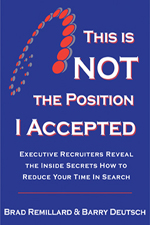
10. Identify the resources you need in 2010 to advance your career. What books, classes, white papers, etc., do you need to make sure you stay on your career path? There are a wealth of resources and tools, many of which are free on the Internet, to help you with your career plan. (This is NOT The Position I Accepted was written specifically for this purpose).
11. Implement. Planning is great, but absolutely worthless without execution. Set up some 30, 60 and 90 day goals. Once they are achieved, then schedule out the next 30, 60 and 90 day goals. Trying to schedule a year out leads to, “I will do that next month as I still have plenty of time.” Before you know it, the year is over. Short term goals are easier to manage and achieve.
2010 is a great year to take control of your job search or career. There are so many resources to help you, that all you need to do is take control and do it.
For some free resources to help you consider:
Joining our LinkedIn Job Search Networking Group. There are numerous discussions and articles to get you started in 2010.
Download the Skills Assessment in the What’s New section at the bottom of our home page. It starts with identifying your skills and finding out which ones are transferable.
Download the sample cover letter from the What’s New section at the bottom of our home page. This is a great tool that will align your resume with the company’s needs.
If this has been helpful to you, then please consider helping others by passing it along to them. Consider forwarding the link to your network, tweeting it on Twitter, adding the link to your Facebook, or updating your LinkedIn status. Let’s all try to help others in 2010.
Just the other day, my son sent me a graphic he had downloaded on his ITouch. The graphic showed someone falling down after slipping or tripping. He sent this to me since many of the girls on my HS Basketball Team are constantly slipping, falling, tripping, flopping down on the ground without being within 10 feet of anyone else.
I suddenly started thinking that it takes skill to screw up a job search. How many managerial or executive candidates are stuck in a job search with no “real” prospects, leads, referrals, or opportunities? How many job search candidates have NO light at the end of their tunnel?
Conducting an effective job search is EASY – NOT Difficult – when you use best practices that are widely published and a systematic approach, such as our Career Success Methodology.
How many job search candidates have failed to conduct an effective job search when the quality and quantity of great ideas, best practices, and creative solutions are staring them in the face?
NOT taking advantage of the wealth of content in published materials, templates, audio programs, video demonstrations, and other tools is like “slipping on a flat surface – it takes real talent!”
Do you take advantage of these tools, tips, techniques, and best practices. Do you strive daily to improve the way you conduct your job search?
OR are you basically conducting your job search in the same approach that you started with 9 months ago?
The materials we offer in our FREE Resources is but a small microcosm of the wealth of great ideas, suggestions, recommendations, and content available to improve your job search.
WHY DO MOST CANDIDATES REFUSE TO LEVERAGE GREAT BEST PRACTICE CONTENT IN JOB SEARCH AND FEEL LIKE IT’S ONLY EFFECTIVE IF THEY THOUGHT OF IT FIRST?
We would love to hear your thoughts and ideas on why your stuck in a rut of using outdated and ineffective methods to find a job when the path to your next job is staring you in the face.
Respond with a comment regarding:
What’s your favorite source of job search related information?
What’s the most recent new piece of learning you’ve gained regarding your job search?
Where do you turn to on the Internet when you need an answer to a job search question?
Who do you follow that blogs great content about job search?
What information can you NOT find on the Internet regarding your job search?
STOP Tripping over yourself in your job search.
Make every day a day in which you learn at least one new thing to improve your job search effectiveness!
So many candidates struggle with finding a position. I’m not going to insult you by telling you it is easy. It isn’t. In fact, for most it is hard work. Mainly because this may be new to you and with the exception of a few, this is not your area of expertise. It is always difficult to do something when you are not an expert. In fact, it is frustrating because most professionals make it look so easy. Have you ever watched one of those home improvement shows do a complete kitchen remodel in just 22 minutes? They never have any problems, everything fits the first time, they never cut a board wrong, and it looks great in the end. Have you ever done a kitchen remodel and have it done that easily?
Their remodel happens so easily because they are an expert in it and we are not. So how does this relate to finding a job?
Companies in today’s market want the expert. They don’t want the jack of all trades, they want the king or queen.
Candidates have a very hard time accepting this. It is better to be great at one thing than good at many. Experts do 1 or 2 things 10,000 times, not 10,000 things once or twice.
What is your expertise? What unique passion, unique experiences, unique skill set, unique talent, unique accomplishments do you have that will, if not separate you from the 100’s of resumes received, at least get your resume to the pile of 5 to 10 to interview?
We live in a 140 character world. Millions tweet thoughts in 140 characters or less. Status updates on Linkedin are 140 characters or less. Can you describe your expertise in such a way that you stand out in 140 characters of less?
If not, then this is a great thing to work on over the holidays.
For example:
A CFO with extensive experience in international finance within X industry and X sized companies
Sales professional that enjoys the challenge of cold calls, increased first time customers by X% in first year directly by cold calling.
HR executive that excels at union neg, reducing benefit costs by X% and 70% of hires from employee referrals up from 20% when I started.
These are just some examples that at least help you stand out, identify your unique strengths and accomplishments.
I have worked with hundreds of people helping them identify what makes them unique. It always starts out the same, “I’m probably not all that unique. I do my job and so do others.” That may be true, but every person doesn’t do the same thing, even in the same functional area.
Think about becoming great at 1 0r 2 things instead of good at many. Do this, and watch how your job search results change.
If this was helpful to you, then help others in your network by passing it along so they also benefit. Helping others will always help you in your job search. You can add this to your status on Linkedin, tweet it, add it to your Facebook page, or email it to your network. Let’s help everyone that is seeking a new job.
For more help on this, join our Linkedin Job Search Networking group. It is free and loaded with helpful discussions and articles. CLICK HERE to join.
Get our FREE 8 Point Job Search Self Assessment Scorecard to evaluate your job search. You can’t fix it if you don’t know what is broken. This will help you. CLICK HERE to get yours.
You can also get a FREE sample cover letter proven to get you noticed. Thousands have downloaded this, and it is FREE. CLICK HERE to get one.
In Part 1 I discussed the need for getting an accountability partner and what an accountability partner is. This article will be about what an accountability partner should do to help you.
A good accountability partner can make a major difference in one’s job search. I have seen people spend months looking, but once they engage an accountability partner their search takes off. You can call this coincidence if you want, I did for a while until I saw it happening over and over, and the people using the accountability partner were giving them the credit for their success.
So what should an accountability partner do? Here are some of my thoughts, and please add your thoughts and experiences in the comment section so others will benefit.
1) Accountability. Sounds obvious doesn’t it, but this is the main goal. A good accountability partner will hold your feet to the fire. First and foremost, they will hold you accountable to do what you say you are going to do.
2) No Excuses. They will listen intently to your excuses and then hold you accountable to what you say. A good accountability partner knows the difference between excuses and real road blocks.
3) Empathy Not Sympathy. Accountability partners understand the emotional ups and downs. They understand your feelings but don’t become emotionally involved or attached. They can separate their feelings from yours, which allows them to stay objective.
4) Listen Well. They know when to let you blow off frustration and vent. They recognize this is part of the process. However, they don’t let that get you off your plan or off track. They will still bring you back and hold you accountable to what you say you need to do.
5) Help and Guidance. Most job searches get stalled at some point. An accountability partner has the experience and knowledge to help you redirect your search. They have the experience to recognize opportunities you, the candidate, may never have thought of or when you are just not doing something effectively.
6) Tough Love. A good accountability partner is not there to be your friend. Get a dog if that is what you want. They are there to give you tough love when needed. Sometimes even make you angry or embarrassed if you aren’t delivering what you said you promised to do. They call it as they see it. Would you really want anything less?
7) Willing to Meet Regularly. They will meet you at least weekly to discuss progress and lay out a plan for the following week and month. If your plan is weak, they will push you to improve it. They keep you on schedule and on track. They will take your calls and reply to your emails. Yes, it is a lot of work and time.
These are some of the key functions of an accountability partner. It is not by any means a complete list. If you get these in an accountability partner you will be off to a great start in 2010.
Please add other key functions that you think are important or have benefited from in the comment section. We welcome and encourage your thoughts, comments and input.
Join our Linkedin Job Search Networking Group. 3400 other people are benefiting from the discussions and articles. CLICK HERE to join, it is free.
Turbo charge your search in 2010 by evaluating its strengths and weaknesses with our FREE Job Search Plan Self-Assessment Scorecard. This will help you and your accountability partner get your search started out right. CLICK HERE to download your scorecard.
Need a great cover letter? A free sample cover letter that has proven to get you noticed is on our Web site for you to use with your resume. CLICK HERE to download yours.
If this was helpful, then please help others by forwarding it on to your network, posting on your Facebook page, Tweet with the link, post to your Linkedin groups or status update. Let’s all do everything we can to help those looking for employment.