Posts tagged: Resume

Ask A Recruiter Anything You Want To Know

As a recruiter for the last 30 years this September,  I get asked questions daily. Sometimes about one’s career and other times job search questions. Most job search questions focus on the tools of a job search, the resume, cover letter, interviews, thank you letters, etc.  Sometimes I also get questions about why recruiters do what recruiters do.

I think asking recruiters these questions is a good thing. Recruiters are uniquely qualified to answer these questions, because good recruiters see both sides of the job search. They hear what hiring managers want and don’t want, like and dislike about candidates’ resumes and interviewing styles, why the company decided not to hire one person or why they hired a specific person. It is easy to draw conclusions as to what works and what doesn’t work most of the time after hearing these things so many times.

So here is your chance to ask me any questions you might have for a recruiter. I realize that many recruiters like to be mysterious, but I believe the more candidates understand how we work, the better we can work together. The more you know about what you need to do so that a recruiter will engage you if they have the right job for you, the better.

Please comment on this article by asking me anything you want to know and I will do my best to answer your question.

If you don’t have a question, another option might be to suggest a topic you would like us to write about. If this will help you shorten your job search then that is a good thing.

So please let me know your questions or anything you would like for us to write an article about.

Depending on the volume, I can’t promise to respond to every request. I will do my best, so give me some time. Also, if many questions come in on the same topic, please check other comments for answers.

We offer many free tools to help you. CLICK HERE to download a free sample cover letter that recruiters like. CLICK HERE to download a sample thank you letter that will make sure you are remembered. CLICK HERE to download a free LinkedIn profile assessment that will help you build a great LinkedIn profile.

Finally, consider joining our LinkedIn Job Search Networking Group. It has a wealth of great articles and discussions to help you in your search. CLICK HERE to join the other 5,300 members of this group.

Brad Remillard

Why Your Skills & Experience Don’t Matter To Recruiters

The title is true. It just isn’t true all of the time.

I can’t count the number of times I have heard from candidates, “I have done all of the things for your position.” or how many times I get a cover letter that goes into a lengthy explanation about “how perfect” they believe they are  for my search.

One question, “If you are so perfect for the position, then why didn’t you get it?”

Skills  and experience will only get you so far in the hiring process. At some point, usually much earlier than most candidates realize, these begin to diminish in importance.

What begins to increase in importance is your qualifications. This encompasses a lot more than skills and experience. Otherwise, why go through the interviewing process? If skills and experience were all that mattered, you would be hired just from your resume.

For example, let’s say that I received your resume and started reviewing it. At this point, skills and experience are 100% of my screening process.  Once, I have read your resume and like what I read,  I will then pick up the phone and conduct a phone screen. I don’t like to call it an interview, because quite frankly I’m in a screening mode more than an interviewing mode.

At this point, your skills and experience may now only be about 75% relevant. During this phone interview, it is true that I’m interviewing you on your skills and experience, but that isn’t all. There is so much more to a phone screen that it took a whole chapter in our candidate job search workbook to cover it all. This chapter is so important that we offer it for free for everyone to download. CLICK HERE if you want to download it.

If that goes well, the next step is going to be a face-to-face interview. Now your skills and experience are at best 50% relevant. Since I have read your resume and conducted a phone screen, I have a really good feel for whether you meet the minimum criteria or not. The interviewing priorities shift. There are so many issues I’m screening on to decide if I will send you out to my client that I can’t list them all.  This took too many chapters in our job search workbook to properly cover and with the depth needed, I can’t possibly go into all of them, but here are a few.  I’m interested in much more than just your skills and experience. I’m also interviewing for how professional your presentation is, how well you can communicate, whether or not you can withstand probing questions on your background, do you have the facts on your accomplishments, do you answer questions in vague generalities or can you get specific, and even how strong or weak your first impression was.  I’m paid to make value judgments regarding  how well you will fit with the company, if you are prepared for how my client will interview you (are you prepared or just winging it) and whether or not you will embarrass me once you are in front of my client. It only takes once in a recruiter’s career to have a client call back and complain that the candidate wasted their time, before the recruiter improves their screening process.  These are really the basic things I’m screening on in our in-person interview. Only about 50% pass this interview.

That means half will never meet the hiring authority. Even though they have the  experience and skills required, they may not be qualified.  Now of this 50%, some will turn out to not be a good match, and often the candidate will agree. Usually, that is less than 10% of the total people I have interviewed in-person.

I can assure you it works about the same when you are interviewing with companies. The only major difference is that as the interviewing process progresses the percentage of reliance on skills and experience decreases even more.

For some senior level positions that require more than 4 or 5 meetings, this percentage may dwindle down to as little as 10% or less.

As the interviewing process moves forward, the hiring authority has already come to the conclusion that the candidates have at least the minimum skills and experience to do the job. Otherwise, they would have been eliminated.

What I’m trying to stress in this article is that candidates rely too much on their skills and experience to the detriment of what is important at different points in time during the hiring process. It isn’t always about your experience. At some point the question is, “Are you qualified?”  It is more about your personality, behavioral issues, managerial style, communications, professionalism, professional presence, assertiveness, etc. that really matters.

These are the things most candidates take for granted during the  hiring process. I have encountered so few that grasp these at the actionable level. Many reading this article will be thinking to themselves, “I know all of this.” That is the point of the article and the frustration. You may know all of this, but what are you doing about it to ensure that you pass?

How are you preparing?

How are you improving your ability to succinctly communicate your accomplishments?

What tangible things have you done to become a salesperson? After all, in a job search you are in sales.

Have you ever video recorded yourself in a mock interview?

What unique and probing questions do you ask in an interview that demonstrate that you are an insightful person?

How do your questions differentiate you from all of the others that ask the same questions?

How do you use your voice to communicate effectively?

I could go on and on. I’m not implying that every person needs all of these. I am implying that every person needs some of these.  The question is, what do you need in your search so that as the percentage shifts from skills and experience to your personal qualifications that you continue to excel?

Test your job search effectiveness by downloading our free Job Search Plan Assessment Scorecard. CLICK HERE to download.

For a FREE example of a cover letter CLICK HERE.

For a FREE example of a Thank You letter CLICK HERE.

For many more FREE resources and articles, join our Job Search Networking Group on LinkedIn. 4,300 people have done this. CLICK HERE to join.

How Would You Rate Your LinkedIn Profile?

I recently asked this question on LinkedIn, “How would you rate your LinkedIn profile?” The choices were, poor, fair, good or very good. I wasn’t referring to completeness based on the LinkedIn scale. I wanted to know how you would rate your profile based on how good or compelling it is.

Would a recruiter, HR professional, or hiring authority be so impressed that they can’t wait to contact you? That is the goal of a LinkedIn profile. Why else would you have one if you are in a job search?

So that is my question to you, “How do you rate your LinkedIn profile?” We would really like to know.

Poor

Fair

Good

Very Good

Now the really important question, “How would you rate your resume?” Let us know that too. Just simply send us a comment. You can do that at the bottom of this article.

Did you rate them both the same? Most rate their resume good to very good and their LinkedIn profile poor to fair. WHY?

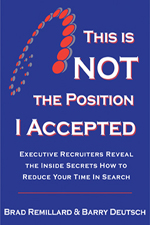
Both of these are marketing documents. That is all a resume is. It is put together to market you. In our best selling job search workbook,“This Is NOT The Position I Accepted” we don’t like to use the word “resume.”  Rather, we prefer to call it your Personal Compelling Marketing Brochure.

Your LinkedIn profile is your online marketing brochure. It must sell you. Your profile can be even more compelling than a resume because of all of the added features LinkedIn allows you to add to your profile. Most are not possible on a resume.

So here is the next set of questions, “How many hours have you dedicated to developing your resume?” My experience is that most candidates spend hours not only developing their resume, but revamping it, changing it, redoing it, updating it, and so on. For many, this is a never ending process.

OK, so then, “How many hours have you dedicated to developing your LinkedIn profile?” We would really like you to be completely honest and answer these questions. Just add your responses to them in the comment box at the bottom.

Still  not convinced about why you need a great and compelling profile on LinkedIn?  Here are some additional reasons that might convince you.

  • For my last three placements, all of the candidates came directly from LinkedIn.
  • Two clients recently told me they hired mid-level sales people directly from LinkedIn.
  • Before posting an open position on a job board, most recruiters go to LinkedIn first.
  • I’m currently working on two searches and I found all of the candidates using LinkedIn.
  • LinkedIn now has over 45 million users.
  • More and more internal recruiters and HR professionals start their searches on LinkedIn.
  • Companies can save thousands of dollars searching LinkedIn versus searching resumes on a job board.

Given all of this, would you reply to a job posting with a fair resume? Would you expect a call back from a hiring authority or recruiter if your resume was “fair?”

If your LinkedIn profile isn’t better than your resume, you are leaving a very valuable tool in your tool box. When I’m coaching job seekers, one of the first items we work on is their LinkedIn profile. It is not uncommon that within two weeks of completing the profile makeover for these candidates, that they start receiving inquiries.

So let us hear from you regarding how you responded to these questions. We are really interested.

Don’t know how to build a great profile?

Get a FREE LinkedIn Profile Assessment. To help you build a great LinkedIn job search strategy, we are having a webinar on March 26. This webinar will ensure you not only have a great profile, but in addition, teach  you how to find contacts, how recruiters use LinkedIn, and how to ensure that if someone comes to your profile that you are positioned as the expert.  CLICK HERE to learn more.

Also, Barry and I have had extensive discussions regarding LinkedIn on our weekly radio show that airs every Monday at 11 AM PST at www.latalkradio.com on channel 2. We add all of these recordings to our audio library. These recordings are free for you to listen to or download. CLICK HERE to review our audio library.

Finally, consider joining our LinkedIn Job Search Networking Group. There are more than 4,4oo members, and a wealth of articles and discussions to help you in your job search. CLICK HERE to join.

Brad Remillard

How To Get Recruiters To Reply To Your Resume

I know this is one of the major complaints by candidates. I hear it all the time, “I send them my resume and they don’t reply. Most won’t even return my phone call.”  As difficult as it is to say, for the most part these candidates are correct. That doesn’t mean it is right, it just means you are correct.

Similar to most at the manager level and above, when you are working, you are generally overwhelmed with things to do. So you have to prioritize. Some things are high priority and some things go on the low priority list. The low priority items may never get done, or may get done in the next few months. Generally, this depends on what other higher priority items trickle in.

Recruiters are really no different. We have to prioritize our day. Some things are high priority and other things are low priority. If  you want to engage recruiters, your job when working with or contacting them should be to move up the priority list. Knowing how I, and many other recruiters prioritize, might help you do this.

Here is how I set priorities regarding the basic duties as a retained recruiter.  Contingent recruiters might vary slightly, but when I was a contingent recruiter it wasn’t a whole lot different.

High priority:

  1. Clients always come first. So some might ask, “Who is your client?” The company paying my fee is the client, not the candidate. Therefore, the company has first priority on my time. That means I will return their phone calls before a candidate’s, I will meet with them prior to a candidate, reply to their emails first,  and screen resumes they send me first.
  2. Candidates on an active search. These are candidates that I’m actively working with on an existing retained search. They could be at any stage within that search which includes, recruiting ones I have identified, interviewing them, returning their calls or emails, reviewing their resume, meeting them, scheduling interviews, following up after an interview, compensation discussions, reference checking, or basically anything I need to do to move the candidate and the search to the next phase.
  3. Marketing. The next priority for me is marketing. This is meeting with clients and potential clients, attending networking meetings, and making sure I’m out in the market so that when a search comes up I’m the one that gets the call. When that call comes, refer to number 1 above.

Important but not a high priority. These I try to get to by the end of each day. Sometimes they spill over to the next day, but I usually try to complete these within 24 hours.

  1. Returning emails not related to a search from people I know or have worked with in the past. These are generally people updating me on their search, prior clients with a question, a request unrelated to an active search, general emails, and clearing SPAM. Sometimes I don’t get to these until the afternoon. I scan down the “sent from” and subject lines, and when I see someone I know I will read the email and then reply appropriately.
  2. Reply to emails and return calls that are a referral. If someone is referring a person to me, I will always reply. I respect the fact that they have taken the time to do this. I feel I owe the reply out of respect to the referring source.
  3. Return voice mail calls. Basically the same as above. I listen to them and clients get an immediate call. Anything to do with an active search gets a call. Others I evaluate and make a decision on what to do with them. Refer to low priority below for many, not all, of these calls.

Low Priority:

  1. Return emails from those I don’t know. This is one of those low priorities that tick many candidates off. The good news is that you have a much higher chance of getting a return email than a phone call. I often try to catch up on these on the weekend or at night. Because of the large volume of these, I’m often two weeks behind.
    1. If you are just sending me an unsolicited resume, I may or may not reply to you. Generally not. I may take a look at the resume to see if it fits an active search. Probably less than 50% of the time I reply. This is why I preach, tweet, and blog,  DON’T WASTE YOUR MONEY ON A RESUME SERVICE THAT WILL SEND YOUR RESUME TO 1,200 RECRUITERS. Save your money as most recruiters don’t even look at them. I doubt more than 5% of retained recruiters do.
    2. If the email is just to introduce yourself to me with no referral,  I will probably just delete it. What else can I say? Like me or hate me, that is what will happen. (If it makes you feel better, then “yes” I spend hours late at night reading the hundreds of unsolicited resumes I receive on a weekly basis).

Lowest priority. So low that I have to be bored and/or very lonely to take action. I’m desperate to just talk to someone and my wife and kids are all busy. I have probably already called every person in my contact list, any tech support that I can possibly think of, and if it’s the only way to get out of having to watch Driving Miss Daisy or The English Patient, I will claim I have to return these phone calls.

  1. These are the  voice mails that simply say, “Hi Brad, this is (fill in the blank) please call me at (fill in the number. I probably don’t even recognize the area code).” or “Hi Brad, this is (fill in the blank) I just want to introduce myself to you. Please call me at (fill in the blank).”  I will apologize now to all of those I have offended. Sorry, if I didn’t return your call.  It is just that I don’t have the time, and I rarely can help you.  I know each call is going to take 5–10 minutes, and in the end, I can’t do anything for you. I used to make a list of these calls. When time permitted, I would work my way down the list but over time the list just got too big. For every 3 calls I returned, I added 5 or 6. I stopped adding to the list when it exceeded 100 calls to return. Sorry, but this many calls to return just isn’t possible. Heck, it is hard enough to reply to that many emails.

It isn’t personal, and please don’t take it personally, when recruiters don’t get back to you. Most recruiters are not trying to be rude, but as I said in the first paragraph, we only have so many hours, just like everyone else, and we have to manage our time too.

My guess is that most managers, when working, don’t have time to return calls from all of the sales people that call. My guess is that you also don’t return unsolicited calls you receive at home.

My hope with this article is two-fold:

  1. The most important of all is to save you money by discouraging you from using a resume blasting service. They are easy to find and often may even call you. When they do call you, do me and yourself a favor, DON’T RETURN THEIR PHONE CALL.
  2. Give you a path to getting to recruiters. Knowing the path of least resistance should help you. If you can’t get in the highest priority group, you may be able to move into the important but not high priority group. All this takes is some time and getting a referral. Most candidates are capable of getting a referral given all the networking tools available.

You can download for free many tools and resources from our Web site. For example, you can download a sample thank you letter. CLICK HERE to download.

If your search is stalled, you can download an 8-Point Job Search Assessment Scorecard. Use this to identify the areas in your job search that may be causing you to be stalled. CLICK HERE to download.

Finally, if you are a member of LinkedIn, you should join our Job Search Networking Group. Over 4,400 people have. It provides an extensive amount of resources and articles for you to take advantage of. CLICK HERE to join.

I welcome your comments and thoughts.

Brad

You Passed The 10 Second Screen. You May Still NOT Get A Call. WHY?

After the storm of controversy I created with the article, “How Recruiters Read Resumes In 10 Seconds or Less” (Click here if you haven’t read it), I thought it would be appropriate to follow up with what candidates, that pass the 10 second screen, can do to get a call from a recruiter.

Whether you like recruiters or  hate them, they are a necessary part of the equation in a job search. Some will fight the system, while others will embrace it. My only goal is to help educate candidates that want to understand how recruiters work. I do this to help candidates, not hinder them. I believe the more information you have about how we work the better it is for you.  Together we can then help each other.

Recently I calculated approximately how many resumes I have reviewed in 30 years as an executive recruiter. It is close to, and probably exceeds, 1 million. That is a whole lot of resumes. That number scared me. After 30 years of doing anything, one should get a feel for what works and what doesn’t.

So before you send me a nasty comment, I’m going to take the position that I’m as good at what I do after 30 years, as you are at what you do after 20 years.

By doing the following and including these few things on your resume, I believe you can dramatically increase your response rate.

1) NEVER use a functional resume. PERIOD. Before you come up with reasons to justify it, the key word in the sentence is NEVER.  I have never, ever met a recruiter that reads them. In addition, I very rarely have talked to a hiring manager, CEO or HR person that reads them. Why fight this battle? Even if 10% read them, that means 90% don’t. Which side of that equation do you want to be on? Considering that 100% read chronological resumes, you don’t want to fight this one. Join the 100% club and use a chronological resume.

2) The format is not as important as the content in the resume. My experience with speaking with candidates is that they spend a lot of time on the format; what should go on top, where should I put the education, do I need an objective, how long should the summary be, etc.  Spend more time making sure the content communicates to the reader what they think is important. I have yet to meet anyone, who told me, “I sure like all of their experience. They are really qualified, but they put their education in the wrong spot on their resume, so they are out.” The article, “Resumes Are About Substance Over Form” gives a lot of good information on this topic. CLICK HERE to read it.

3) Help us help you. All recruiters need to know certain things to make a decision to call you. The very basics include:

a) Some information on the companies you have worked for such as, size, number of locations, industry and products. This can be done in one sentence or less. Just the name of an unknown company is worthless when screening. You want to stand out from the rest.

b) If you are in management, a little about your organization such as, number of people you manage, are any of them managers, titles, and are they all in the same location.

c) If you are in sales, who are your customers? If not by name, at least what industries you call on, are you selling B2B or B2C, product description, territory size, and average size of the sale. I am constantly amazed that most sales people exclude this information. As a salesperson what you are selling is pretty darn important for the reader to know.

d) For technical people, what technologies are you working with? What language are you programming? If in engineering, is it a highly custom engineered part, are you working on a system or a component, are you designing nuts and bolts or toys? Seems important to me.

d) Include quantifiable results in the accomplishments. If you don’t, these are meaningless and most other resumes will read the same as yours.

The first comment I get from candidates when I suggest these things is, “My resume will be too long.” No, it won’t. I have prepared thousands of resumes and I can get all of this on two pages. In fact, in our book, “This Is NOT The Position I Accepted” (CLICK HERE to review)  there is an example of a two page resume that contains all of this information. The person has over 20 years experience, so it is very doable.

Getting in the “A” pile is your responsibility, not the reader’s.

I wish more candidates would help us help them. All you have to do is give us the information we need to call you.

Contrary to what you may think, recruiters want to fill the position just as badly as you want the position.

For a FREE example of a cover letter CLICK HERE.

For a FREE example of a Thank You letter CLICK HERE.

For many more FREE resources and articles, join our Job Search Networking Group on LinkedIn. 4,300 people have done this. CLICK HERE to join.

I welcome your comments and thoughts.

Brad


Increasing Your Resume Response Rate – Audio Recording

Most resumes and cover letters end up in the trash can. The vast majority of resumes and cover letters submitted for a job posting DO NOT give a hiring manager or recruiter the incentive to pick up the phone and conduct an interview. Most Resumes and Cover Letters fail to match-up with the listing of expectations, skills, duties, responsibilities, results, and outcomes mentioned in the advertisement or job description.  Learn the behind-the-scene’s secrets on how to increase your response rate with recruiters and employers from Barry Deutsch and Brad Remillard, who’ve viewed millions of resumes over the last 30 years in their executive search business.

To download or listen to this recording CLICK HERE, then scroll down to the recording.

5 Most Frequently Asked Job Search Questions I Receive

On Friday’s from 9 – 10 AM PDT we often conduct free “Candidate Open Forums.” These are conference calls open to all of our candidates, in which we discuss topics and answer questions directly from you – our candidates. Unfortunately, we are limited to 50 people on the line at one time, so often we can’t get to all of the questions submitted ahead of time via email.

We believe these are important, so from time to time in this blog we will discuss the topics and questions we, 1) don’t get to during the conference call, 2) are asked over and over again (so these are probably on your mind too), and 3) just consider important for you to know.

Remember, we are retained executive recruiters so the answers and thoughts come strictly from that perspective.

1) Chronological vs. functional resume? Easy answer – NEVER, NEVER, NEVER, use a functional resume. In my almost 30 years of recruiting I have never had any recruiter or hiring manager support the functional resume. I have also been on many panels where all of the panelists agree to NEVER use a functional resume. Functional resumes just scream out,”Try to figure out what I’m trying to hide.” See our free audio file on resumes.

2) How do we overcome negatives such as age, turnover, time between jobs, etc? We believe you address them head on. If you have a negative, avoiding it doesn’t make it go away. We have a blog entry “Preemptive Strike” which you should also consider reading. If you have a negative item, you should bring it up straight away, discuss it openly and then whatever happens, happens. Don’t assume, “They didn’t bring it up so it must not be a problem.” They didn’t bring it up because they already settled it in their mind. You need to preempt any preconceived ideas before they come into play.

3) What is the best method and frequency for following up on a resume? For us, as recruiters, we prefer via email or one of the social media forums, Linkedin or Twitter. Recruiters have reduced staff just like many other companies, while the number of calls from candidates has skyrocketed. It isn’t possible to call every person. Email allows us to reply late at night, on weekends, or even while waiting in the lobby of a client. I can’t do that with phone calls. Regarding frequency, if in fact you are dead on perfect, then after two weeks send a follow-up email.

4) With so many top level executives in the market, how do you differentiate yourself from the pack? This is the 64,000 dollar question. We believe the best answer is to have a very compelling resume which is targeted specifically to the position. A generic, one size fits all resume will not differentiate you. That is what “generic” means. In today’s market our clients and therefore recruiters, are seeking very specific backgrounds. We are not looking for the proverbial, “Jack of all trades,” we are looking for the, “King or Queen for a specific role.”

5) Is negotiating with the employer different today due to the economic situation, and if so how? There is a difference given today’s market. For example, most companies will not relocate today especially in a large market area. Also, companies tend to be closed to severance agreements. If you aren’t working, they figure there is no reason to give an agreement and they are in control. You have to pick your issues and know where to compromise. This is all part of the pre-planning process for a job search. What issues will you compromise on and which ones should you dig in your heels?

You can download a free 8 Point Job Search Plan Self-Assessment that will help you evaluate exactly what you need to do to improve your search. CLICK HERE to download.

Is your Linkedin Profile going to get you noticed. Our FREE Linkedin Profile Matrix will help you develop an outstanding profile. CLICK HERE to download yours.

Join our LINKEDIN Job Search Networking group. Over 4200 people have joined. CLICK HERE to join.

We realize not everyone will agree with these answers and that is healthy. So if you don’t agree, or wish to comment, we encourage you to do so. Just click the link below.

Brad Remillard

5 Tips How To Keep Your Resume Out Of The Black Hole

Candidates constantly complain about how when they email resumes they all seem to end up in the proverbial “black hole.”

As a recruiter, who receives on average 6 to 7 hundred resumes a week, I can understand your frustration. I’m also sure I may not be able to eliminate it, however, I hope I can help you reduce it with these few tips.

1) When you move from candidate to hiring manager remember your frustrations and treat the people sending you resumes as you want to be treated now. You know, the thing our parents always taught us about treating others the  way we want to be treated. Sounds so obvious but I just wrote another article about how rarely this happens.

2) The best way to avoid the black hole in the first place is not enter it. If you include a cover letter; a) don’t send it as a separate attachment to your resume. It should be the first page when the resume attachment is opened. b) use either Word or PDF to send your resume. I receive many resumes I can’t open. c) your cover letter should be designed to grab the reader’s attention. That means the cover letter must clearly and with a simple glance align your background with the needs of the job. CLICK HERE and download a free copy of a sample cover letter that does just that.

3) You don’t have to be the first resume received. Most ads run for at least 30 days. Many candidates have experienced most companies take their time. So wait a few days or even up to a week or more before replying. Avoid being one of the first 400 resumes. After the first blast of resumes come, as more trickle in one or two at a time, I will often just open the resume take a look at it and make a decision how to handle it. These people avoided the rush and got their resume reviewed.

4) First try the personal approach. With number 3 above in mind, use this time to try and find a personal connection within the company or recruiting firm. There are many ways to do this. 1) Linkedin should be first on your list. This is  exactly why you need to build your connections to the maximum number possible. 2) Google the person’s name, position, or company name, anything that will help you target the right person within the company. Then look for a personal introduction. Most recruiters value a referral.

5) Don’t use services that blast your resume to 10,000 recruiters and/or companies. This is a major waste of money. What do you expect will happen when someone receives a bunch of unsolicited resumes? What would you do with them? How do you handle unsolicited emails? Most call it SPAM. It doesn’t work.

Hope these tips are helpful and now your resume will at least pop to the top.

Designing a resume is the starting point of every job search. If your resume gets screened out it is worthless.

If you didn’t know these little tips our Complete Resume System is designed to make sure your resume gets noticed. We guarantee it. The hundreds of people who have used this system to build an effective resume are getting their resumes read. You can too. There are many more tips you should include in your resume. For more information about getting your resume noticed check out our Complete Resume System. CLICK HERE to view it.

You should join our LinkedIn IMPACT Hiring Solutions Job Search Networking Group. It is free on LinkedIn and there is an enormous amount of articles and discussions to help in your job search. That is why over 4000 people have joined so far. CLICK HERE to join if you are a LinkedIn member.

You can also download for FREE a sample cover letter to use that will align your background with those of the company. CLICK HERE to download your sample.

I welcome your thoughts and feedback.

Brad Remillard

HELP, Resumes Keep Coming In. What Should We Do?

I received 347 resumes just this week. On a weekly basis this is about average. Some weeks I get more, some weeks less, but over time 300 or so is not unusual.

Many of these resumes were received for a search directly via email, about 10% via snail mail, another 15% from referrals and another 15% completely unsolicited with candidates just introducing themselves.

Of these, maybe half to two-thirds had cover letters. Of those with cover letters, about 80% were worthless and I didn’t even take the time to read them. Why, because they all were almost exactly the same. As they say in the movies, “Only the names had been changed.” The other 20% I did take the time to at least scan them looking for points that might align with a current search or that at least piqued my interest.  These 20% were different in that they were not long paragraphs that simply regurgitated the resume,  but instead most were either bullet points or the two column type we recommend using and have a free sample available for all to download. (CLICK HERE to download). They were easy to scan to pick up the highlights and decide how to properly handle the resume.

Although I really don’t care one way or the other if a resume has a cover letter or not, but if a candidate is going to include one it should add value by intriguing the reader enough to look at the resume. If not, why include it?

I believe this is why most cover letters are ignored. They all look alike and do nothing to make the reader want to take a look at your resume, so the recruiter, HR, or hiring manager completely skips over them.

Of the 347 resumes, most were a complete waste of time to even review. Sorry, I know candidates don’t want to hear this, but sometimes the truth hurts.  Sending me a resume when I don’t have an active search is not going to help you. As a retained recruiter, I work the searches I have and that is my focus.  If your resume doesn’t match my clients needs then I rarely save it. Not because you aren’t a qualified person, not because you don’t have great experience, but because after 30 years of this I know the profile of candidates that I place.  If you don’t meet that profile, I don’t need your resume regardless of your experiences and abilities.

This is true of most recruiters.

I recently heard from a candidate complaining that he had sent out over 200 resumes and had heard back from only 5. Actually that isn’t bad. Mass mailing resumes is a waste of time and money. It is a complete crap shoot that anything will stick. I advise all candidates to never do this.

The best way to get your cover letter and resume noticed is to be very targeted and focused, especially with recruiters. We want to fill the position as badly as you want the position.  From my perspective, if your background is consistent with my client’s needs and you meet the basic criteria I outlined in the article, How Recruiters Read Resumes In 10 Seconds (CLICK HERE to read), you will get a call from me usually within an hour.

Those 10% that were referred to me I responded to. I always respond when a person is referred to me, even if I can’t help them. I appreciate referrals and want to respect the person that made the referral. In my opinion this is the best way to get a recruiter that you don’t know to engage you.

The unsolicited resumes were put into a file that when time permits I will review. If they meet the profile of the type of candidate that I have a high probability of placing in the future, I will add them to our database.

My partner Barry and I have written extensively on what we believe is the best way to get your resume noticed by recruiters, HR, and hiring managers.  These recommendations come from over 30 years of experience as recruiters, from asking hundreds in HR what they use as screening criteria, and from thousands of hiring managers, CEOs and key executives telling us how they review resumes. Barry and I try to pass this information along to all so it will be helpful and reduce your level of frustration by knowing what to expect when you send out a resume.

One more way we can help you is to speak directly with you utilizing our webinars.  Our time and knowledge is valuable so YES, we do charge a nominal fee for the webinar. To balance that, we also offer a lot more tools and resources for FREE than what we charge for.

We’ve DEEPLY DISCOUNTED THE WEBINAR FOR THOSE JOB SEEKERS WITHIN OUR JOB SEARCH COMMUNITY – loyal followers on Twitter, readers of our blog, and members of our LinkedIn Job Search Discussion Group.

In a lively one-hour presentation, I’ll show you the inside secrets (from a retained executive recruiter’s perspective) of how to get your resume reviewed every single time and boost your resume acceptance rate (the number of times you get called for an interview from submitting your resume) from a dismal level of less than 10% to well into the 50% PLUS RANGE. If you’re reading this blog, when you sign up for the Webinar use the coupon code of IMPROVEMYRESUME.

If the small, inconsequential, almost non-existent fee for the webinar is too much to bear to boost your resume acceptance rate and cut your job search time dramatically, please feel free to download our many FREE resources for job seekers, including our radio show broadcasts, cover letter sample, and other tools.

I welcome your thought and comments.

Brad Remillard


How to Get the Interview and Not Get “Deleted”

This is about your “digital first impression” and six ways to screw it up. Every recruiter has his pet peeves about resumes and I’m no exception. Like it or not, in this digital, email, on-line world, your first impression as a candidate is often the resume and cover letter you send. (OK, I admit, I don’t read cover letters much. I cut to the resume first. Sometimes I come back and read them, but the resume is what I’m interested in.)

I’m not going to write about all the strategies and methods of creating a resume and cover letter, I’m just going to tell you the things that will irk most recruiters (or at least this one) so you should avoid them. In no particular order:

• Size matters: Look at the whole first page of your resume. Would you want to read it or does it look like the fine print on your credit card statement? Don’t cram so much information into it or make the type font so small that people will strain their eyes to read it. I know, we can enlarge it, but it just shows you aren’t thinking about your reader.

• I won’t believe you can walk on water: A summary of your experience in terms of function, industry and accomplishments is fine, but skip the flowery descriptions. I see “hands-on”, “profit driven”, “strong leader”, “dynamic”, “visionary” in summaries all the time. I don’t read them because I know the candidate wrote them. I’ll decide how “dynamic” someone is when I interview them, not when I read their resume. Save the space for more accomplishments.

• Attendance doesn’t count: Companies don’t pay you just to do things; they pay you to accomplish things. Resumes that are long on responsibilities and short on accomplishments indicate someone who just ‘showed up’ and are not the top quartile talent that companies are looking for.

• Osmosis is not my strong suit: Probably the best way to get your resume tossed is to list the name of a company with no description of what it does. This is especially true of middle market companies. (Even if a company is a household name, include what your division, group, etc does!) The reader has no context from which to assess your accomplishments until they know what the company does and its relative size. I automatically toss these resumes. How can you present an executive to a client if they don’t demonstrate this simple piece of common sense?

• Chronological or functional? No contest here in my book, make it chronological. I want to know what you accomplished and where. If you just list a bunch of accomplishments and a list of jobs, I can’t tell where you did what. You may have the exact accomplishment I’m looking for, but if you’ve worked in different industries or different sized companies, I can’t tell how relevant the experience is.

• Goldilocks syndrome: Resumes can be too short or too long, and there is a “just right” length. In general, I find one page resumes to be too short to be meaningful, and they don’t “peak my interest”. I don’t want to ask you for more information. Give me what I need to assess your background against my requirements. Three page resumes or more are usually too long. There’s either too much detail or you’ve gone back beyond 10-15 years in your career. Put those older jobs under Prior Experience. The last 10 to 15 years of experience is usually the most relevant to what we’re looking for.

OK, I got that off my chest. These tips aren’t going to guarantee you get the job, but they should help keep you from being eliminated before the game starts.

When you land that next job, and start to build your team, check your hiring process first.

For more, join our LinkedIn Job Search Networking Group. CLICK HERE to join.

View our 5 minute video, Vital Information Missing From Many Resumes. CLICK HERE to view.

Download a FREE sample cover letter to go with a great resume. CLICK HERE to download.

For information on how to arrange for Hagerthy & Co’s complimentary Hiring Process Assessment go to www.hagnco.com/page13.html#HiringProcess.  Mike Hagerthy is the founder of Hagerthy & Co, an executive search, training and consulting firm.