Posts tagged: cover letter mistakes

Job Seekers and Warren Buffet

I am currently reading the book, “The Snowball: Warren Buffet and the Business of Life” by Alice Schroeder. It is an interesting biography on Warren Buffet’s life starting as a small child.  Some of the more interesting parts highlight what influenced his thought processes about everything from money to how he treats people.

I haven’t finished the book yet, but as I was reading it two sentences stood out. To me, these two sentences explained exactly why so many candidates stay in a job search so much longer than need be. I have known this for a long time. The candidates I work with one-on-one in our job search coaching programs often start out the same way.  I interview and speak with hundreds of candidates a month. It use to surprise me the number of people who acted this way. Not any more, I just accept it. I don’t understand it, but I do accept it.

When Warren was a teenager he read the book, “How to Make Friends and Influence People” by Dale Carnegie. Just about everyone has heard of this book.  His biography addresses the impact this book had on him. How it “honed his natural wit, above all it enhanced his persuasiveness, his flair for salesmanship.” Obviously, this one book influenced him so much that decades later he still remembered it and gave it credit.

It was  the two sentences before this which stood out and relates to the vast majority of candidates I encounter. Alice Schroeder writes, “Unlike most people who read Carnegie’s book and thought gee, that makes sense, then set the book aside and forgot about it, Warren worked at this project with unusual concentration; he kept coming back to these ideas and using them. Even when he failed and forgot and went for long stretches without applying himself to the system, he returned and resumed practicing in the end.”

This is what grabbed my attention. As soon as I read it, I thought this is exactly what most candidates do. This is exactly why so many candidates spend so many extra months searching for a new positions. They read a book, attend a webinar,  read a blog article or listen to an audio file and think, “Gee, that makes sense, then set it aside and forget about it.”

Few, my guess less than 10% do as Warren did. Read the sentences again. Does anything stand out to you as it did me? What did Warren Buffet do different than all the others?

I see this constantly.  People will return our job search workbook with a note, “Already know all this stuff.” At first I was stunned. When we wrote the book we spent an extensive amount of time identifying the mistakes candidates continually make. We  then worked extremely hard to provide solutions  to those mistakes. So it struck me as strange, that so many people knew all these mistakes, but just kept making them. How could this be?

I’m sure the many other excellent authors of books on this subject have experienced the same thing.

So I decided to test if it was true these people really did know all this stuff. I started doing some follow-up. I would call the person and ask for feedback. As I got bolder, I became more direct. I started asking very specific questions of those that “already know all this stuff?” For example, I would ask:

  • Since you already know the only three things which can be measured during a phone interview, what do you do to properly prepare?
  • As you know, there are only three types of questions asked in an interview. How do you identify which type of question is being asked and how do you prepare for each type of question?
  • Of the ten most important questions to ask in an interview, which ones in your opinion were most helpful and of those which ones do you use most often?
  • How long have you been using the cover letter we recommend and what has been your experience with this style?
  • How often have you found yourself in anyone of the 5  positions in the Circle of Transition and how do you handle it? This could be really helpful to other candidates?
  • How is your networking business card different from your interviewing business card?

It didn’t take long to discover these people may have read the book, but unlike Warren Buffet, they didn’t embrace the ideas with “unusual concentration.” Instead it was, “Gee I already know this stuff.”  When in fact, from their answers, they had no idea what mistakes they were making and how the book provides solutions.

Warren Buffet read Dale Carnegie’s book over and over again. He referred back to it time and time again. He practiced regularly. When he failed it was back to the book. That is what made him unique. He didn’t just know it all, he implemented the concepts. He didn’t blame the book when things went wrong, he adjusted and tried again.

I know from the one-on-one job search coaching we do, when we get candidates to stop knowing everything and start doing things the right way, they find job leads that eventually lead to offers and employment.

Although it might appear as an attempt to sell our book it really isn’t. There are many great resources available to candidates. Many are 100% free. It is positively an attempt to get candidates to stop saying, “Gee, that makes sense, but I already know it.” It is positively an attempt to get candidates to learn from Warren Buffet. To get candidates to refer back time and time again to excellent resources. To re-read the books, re-listen to the audio recordings and to take this advice to heart with “unusual concentration” as Warren Buffet did.

I have discovered the reason there is so much written for job seekers is because job seekers need so much help. If candidates did everything so perfectly there wouldn’t be a need for all the books, blogs, articles and webinars.

The next time you read anything designed to help you in your job search don’t let your first thought be, “Gee, I already know that.” Rather force yourself instead to ask, “Good advice. How am I implementing that in my job search?” Attack it the same vigor and “unusual concentration” as Warren Buffet.

Try this approach first and you will find yourself gainfully employed a whole lot sooner.

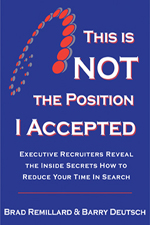
OK, now this is a blatant attempt to sell you a book. You can get our job search workbook to review for free. Just pay the $5 shipping. For details on this offer CLICK HERE.

Test your job search effectiveness by downloading our free Job Search Plan Assessment Scorecard. Find the strengths and weaknesses in your job search. Then attack the weaknesses with “unusual concentration.”  CLICK HERE to download.

For a FREE example of a cover letter that recruiters, HR and hiring authorities  like and will get your resume read, CLICK HERE.

I welcome your comments, thoughts and feedback.

Brad Remillard

Cover Letters Are Worthless And Outdated

I started recruiting in 1980, and in that thirty years I have either run or owned executive search firms. IMPACT Hiring Solutions is a very active executive search firm. For the first fifteen years I worked mainly in the finance and accounting field and most of the searches were contingent, meaning I got paid when the company hired a candidate that I presented to them. Until then I worked for free.

In the last fifteen years I have shifted to a retained recruiter and now my searches cover just about every functional area from HR, Sales, Finance,Operations and so on. Now as a retained recruiter I get paid when I start the search and as the search progresses.

This is only relevant to demonstrate that I have had a lot of opportunities over the last thirty years to see how recruiting and the hiring process has changed. I have been able to interact with just about every functional area in a company with literally thousands of hiring executives, HR professionals and CEOs to observe their practices. I’ve watched them screen resumes, I’ve asked if they want or read cover letters, what grabs their attention and what turns them off, what resume format they prefer and how long a resume should be.

The plain fact is that one can’t do anything for thirty years and not learn something.

HIRING HAS CHANGED

With the invention of the Internet hiring changed. It continues to evolve even today with the explosion of social media and sites such as LinkedIn, Twitter and Facebook. When I started thirty years ago we hadn’t heard of a fax machine. Resumes and cover letters were all sent via snail mail. If that wasn’t bad enough, they were typed one at a time on a typewriter (for those of you too young to know what a typewriter is Google it for a picture or the Smithsonian has them to view). Every tiny change meant you had to retype the complete resume. Cut and paste didn’t exist.

Hence the need for the “cover letter.” Back then customizing a resume meant you had to retype it yourself (and most people back then didn’t type) or paying someone to type it which wasn’t practical or affordable. So instead, candidates added a cover letter to highlight areas in their background to match the position. Some cover letters were even handwritten and that was acceptable. Back then, the cover letter served a valuable and practical purpose.

Fast forward to the 21st century. With laptops being as common as toasters, the invention of word processing, email, social media and the fact that everyone can type, the ability to customize a resume to a specific position can be done in a matter of minutes. Hence, the traditional cover letter lost its purpose and value.

But just like a government program, once it starts it rarely goes away, so the cover letter continues to live even though it is no longer useful (just like many government programs).

THE PROBLEM TODAY

All of the controversy today about cover letters lingers because so many candidates don’t know what to do or how to do it. As a result, they rely on outdated information, that is how we have always done it or that is the way we did it thirty years ago. Yeah, and my dad walked thirteen blocks everyday to school in the snow, sleet, pouring rain and without boots. Well, my kids didn’t do that because times have changed and some things just out live their usefulness e.g. 5.25 floppy disks, 8-track cassettes and DOS programming and the cover letter!!!

THE SOLUTIONS TO WORTHLESS COVER LETTERS

Cover letters can serve a purpose even today. They can still be used to highlight how your experience and skills align with the job. But that is it.

Candidates still use cover letters as a way to update their resume instead of rewriting it. They put information in the cover letter that should be in the resume and figure that it’s acceptable. WELL, IT IS NOT ACCEPTABLE.

A cover letter today should be used like a sound bite in a commercial. It should grab the reader’s attention and get them interested enough to read your resume. Then, when they read your resume, they should find not only everything listed in the cover letter, but additional points of interest that distinguish you from all of the other candidates.

Your cover letter is simply a short advertisement about how you align with the open position, so that the reader is compelled to read your newly rewritten, focused and targeted resume for their specific position.

TO COVER LETTER OR NOT TO COVER LETTER – THAT IS THE QUESTION

Should you have a cover letter or not is another point. I say “YES.” Only because over the years many HR professionals, CEOs and hiring managers have told me that they want one. They believe it is polite and a professional introduction. It is true that many don’t care if you have one or not, but it is better to have one for those that want one, and those that don’t care will just ignore it and move on.

One more way we can help you is to speak directly with you utilizing our webinars. Our time and knowledge is valuable so YES, we do charge a nominal fee for the webinar. To balance that, we also offer a lot more tools and resources for FREE than what we charge for.

We’ve DEEPLY DISCOUNTED THE WEBINAR FOR THOSE JOB SEEKERS WITHIN OUR JOB SEARCH COMMUNITY – loyal followers on Twitter, readers of our blog, and members of our LinkedIn Job Search Discussion Group.

In a lively one-hour presentation, I’ll show you the inside secrets (from a retained executive recruiter’s perspective) of how to get your resume reviewed every single time and boost your resume acceptance rate (the number of times you get called for an interview from submitting your resume) from a dismal level of less than 10% to well into the 50% PLUS RANGE. If you’re reading this blog, when you sign up for the webinar use the coupon code IMPROVEMYRESUME.

If the small, inconsequential, almost non-existent fee for the webinar is too much to bear to boost your resume acceptance rate and cut your job search time dramatically, please feel free to download our many FREE resources for job seekers, including our radio show broadcasts, cover letter sample, and other tools.

You can download for free a sample cover letter that aligns your background with the position and is not a substitute for the resume. CLICK HERE to download your sample cover letter.

Join our LinkedIn Job Search Networking Group for vibrant discussions, articles and much more information to help you in your job search. CLICK HERE to join the 3600+ LinkedIn members that already have.

I welcome your thoughts and comments.

Brad Remillard