Posts tagged: Job Search Mistakes

Getting Professional Help Can Shorten Your Job Search – Example 1- Turnover

This entry is part 1 of 1 in the series Getting Professional Help

I find it interesting that people will pay for help for just about anything but their job search. People pay for dance lessons, golf and tennis lessons, piano lessons, financial help, help with taxes, the list is endless. Yet for possibly the most important part of one’s life they refuse to pay for help. So many choose to continue a job search instead of seeking professional help. There are many good career coaches,  job search coaches, executive recruiters and others to help you. Most aren’t that expensive, when compared to what one loses each month in salary by not getting a job.

Let me give you two examples of how getting professional help impacted two people with their search. First, it wasn’t that they were doing anything wrong, it was that they weren’t doing everything right and didn’t know what to do when issues came up. The results were consistent, they didn’t get the job. This was too bad because as  you will see, these were easy issues to handle. The candidates just didn’t know how. By the way, neither did all the non-professionals in their network.

Example 1:

This candidate had been on the market for about 6 months. He had been getting interviews and coming in second. Most of the time he was told some story by the company or recruiter about why he didn’t get the job. Rarely the real story. Then, because he had a friend in the company he was interviewing with, the true story came to life. He was told the original reason for not hiring him was that the other person had industry experience. His friend found out the real reason was that he had what they called “high turnover.” His last three jobs had lasted on average only 18 months.

So the obvious question to me was, “How many jobs in the last 6 months where he came in second, had he lost because turnover was the real reason?” We will never know, but I’m going to assume at least one.

When we first started working together, this issue obviously came up. It turns out this is a very simple issue to handle, especially in this case. Like so many candidates, he just didn’t know how to handle it in the hiring process.

The way to handle it was to face it head on. He figured if they didn’t bring the topic up during the interview that it wasn’t an issue. WRONG. It wasn’t an issue that the company felt they needed to discuss, because right or wrong,  someone had already decided he had high turnover, so there was no reason to discuss it. WRONG.

We changed that. Now the candidate brought it up first in the interview. In every interview. He had nothing to hide and so he forced the discussion. At the beginning of the interview when asked, “Tell me about yourself.” or “Give me a quick overview of your background.” he would start out with, “From my resume it may appear that I have had a lot of turnover. I can understand why most people would think that, I would think that too if I looked at my resume. Let me explain the reasons why I left each company, and in many cases, I didn’t leave the company, the company actually left me.”

This was a huge change in the interview. It was no longer left for the company to decide if it was high turnover without understanding the issues. It was right out there to discuss.  Does this mean all companies will accept the reasoning? Absolutely not. All it means is that the ones that are open to understanding why bad things happen to good people will.  For those companies that aren’t open to understanding the reasons, the outcome will be the same even if he didn’t bring it up.  He wasn’t looking for those companies. He wanted the one company that would have passed on him, but once hearing the reasons changed their mind. That was the one company that would reconsider him.

Within two months he started working.

Please don’t comment back on how bad the companies are for not probing about his background, or who would want to work for such narrow-minded companies. That is the purpose of the article. Quite frankly, when unemployed for 6 months, most people don’t care about narrow-minded companies. They care about a paycheck.

The purpose of the article is to encourage you to think about getting professional help. I will outline what professional help is in a future article so you don’t get ripped off.  CLICK HERE to read the article,  Job Seeker Scam Alert – Job Seekers Are Getting Ripped Off so you don’t get ripped off.

This person was earning over $150,000 a year. That is $12,500 a month that he was losing because of a silly reason that wasn’t handled properly. For every additional month that he was searching this was the cost. I think the cost far outweighed the benefit of getting a little professional help.

We offer many free tools to help you. CLICK HERE to download a free sample cover letter that recruiters like. CLICK HERE to download a sample thank you letter that will make sure you are remembered. CLICK HERE to download a free LinkedIn profile assessment that will help you build a great LinkedIn profile.

Finally, consider joining our LinkedIn Job Search Networking Group. It has a wealth of great articles and discussions to help you in your search. CLICK HERE to join the other 5,300 members of this group.

I welcome your thoughts and comments. If you liked this article, please tweet or re-tweet it so others can benefit.

Brad Remillard


Effective Networking Requires Planning – Step #1

This entry is part 1 of 1 in the series effective networking

The key word in the title is “effective.” Anyone can network ineffectively. The sad part is that most people I meet do ineffective networking. What is sadder is that they get frustrated or burned out and often give up.

The common belief  I hear from candidates about networking is generally all about meeting as many people as possible. Networking is not about meeting people. It is about meeting the right people.  Granted, most candidates are out meeting a lot of people. If meeting a lot of people is their goal, then most are achieving it. However, for most, the reason for networking is to receive job leads or referrals that will lead to job leads. Many candidates, if not most candidates, aren’t achieving this goal at the level they would like to.

I believe this is strictly a result of lack of planning. The 6 P’s are something to remember, “Prior proper planning prevents poor performance.”

Planning takes time and research which is something few are willing to do when entering the market. I’m not saying many don’t think extensively about all the options, but thinking isn’t planning.

True planning means more than thinking. It involves action. It involves writing. Research isn’t thinking, it involves work, testing, and change if the research doesn’t prove effective.

Networking planning means preparing the tools you need to effectively promote yourself. Some very basic tools you need are:

  1. Networking cards, not business cards. Too many people go to Vistaprint online and get the free cards. Like most things that are free in life, you get what you pay for. These are fine when you go to an interview, but worthless for networking.
  2. Develop a networking bio. Don’t use your resume.
  3. Most don’t have any networking plan written out. I have tested this in the last month prior to writing this. I have asked all of the 43 people I have met over the last month to bring a copy of their networking plan to our meeting. Six had something to bring and three of those looked like they made it up for our meeting. At least that is a start.
  4. Few had identified a thorough list of people, companies, organizations and trusted advisers they want to meet. You need a specific list by name.

Just doing these four things will greatly improve the effectiveness of one’s job search. I know this for a fact, because the three people I’m counseling on their job search have done these things and have seen dramatic changes in their referrals.

Try implementing these four steps for starters. Then we will move on to Step 2 – effective social media networking. By the end of this series, I hope to help you become highly effective at networking.

For more information on effective networking, check out our many free resources.  CLICK HERE to review and download the free resource that is best for you.

Join our Job Search Networking Group on LinkedIn. This is one of the best free resources for some of the best articles on the topic of job search. CLICK HERE to join.

Start by assessing how effective your job search is by downloading our free 8-Point Job Search Self-Assessment Scorecard. This will help you identify the strengths and weaknesses in your job search. CLICK HERE to assess how effective your job search is.

I welcome your thoughts and comments.

Brad

Is This Age Discrimination Or Not, You Tell Me?

I was recently co-interviewing candidates with my client for one of his open positions. Together we interviewed 3 candidates all in the same day.

Obviously, two of the candidates didn’t get the job. One of the candidates that didn’t get the position was the catalyst for writing this article.

We began in the morning with the first person. The first impression of this candidate was weak. Although professionally dressed in a suit, it didn’t fit him well, it was clear it had been worn a few times without being pressed, he was overweight, hair was combed, but groomed would not be used to describe him. His overall presence was OK, it  just didn’t overwhelm us when we first met him.

As the interview progressed, he didn’t come across with great energy or enthusiasm. His body language was low in the chair and even when he was asking questions he never seemed to change how he sat in the chair.  His voice was monotone. Eye contact during the interview was good and he did his best to engage us.  Not that he did poorly, but the spark of a person who really enjoys what he does day to day wasn’t there. He came across as bored and would work because he needed a job until he retired.

He asked a few insightful questions during the interview, but nothing all that impressive. He closed the interview politely.

Again, no real knock out blow, and with the weak appearance and the interview we just weren’t all that impressed.

The next candidate was different. Candidate #2 was well dressed and groomed. Polished comes to mind. He came across in the first impression as confident, with drive and energy, and as someone very comfortable meeting people. He was all business but didn’t over do it.

As the interview progressed he wasn’t overly friendly, he stayed focused on the business at hand without a lot of small talk or joking. We could see from his answers that he listened well to our questions.  His body language was clearly designed to engage us. We assumed that he had been trained this way. He leaned forward when stressing a point, he mirrored a lot of our movements, which is a technique used to make us feel comfortable, and he used voice inflection very well to stress points and add emphasis.

He asked a number of very good questions during the interview that demonstrated he really understood the position and many of the issues that he would encounter if he was to come on board.  He left the interview on a positive note.

We were impressed with him, his professionalism, his approach, and his ability to engage us.

Candidate #3 was completely different, as this time the candidate was a she not a he. She was very professional. She was dressed in a very professional business suit and groomed perfectly. It was apparent that she had dealt with senior level executives and knew how to present herself. She was outgoing, friendly, and engaging from the moment we met her. She was just one of those people that has that extra spark. She knew how to conduct small talk, demonstrated the appropriate level of humor for the circumstances, and was just comfortable in a business environment. This was all from the first impression.

As the interview progressed, so did she as a candidate. Her body language was much like the second candidate. She sat up straight when needed, her eye contact was continual and even when she wasn’t speaking directly to me I felt like she was, she was well prepared to not only answer our questions but asked some excellent questions as well. Unlike candidate #2, even though we did spend the vast majority of time discussing the position, it just didn’t seem that way. She was very business focused just as the second candidate was, but somehow it didn’t come across that way.

She left the interview on a positive note, but made a little extra effort to make sure that we were satisfied with her and her answers.

We decided to proceed with the last two candidates. I had to call the first one and let him know the bad news. This is positively the worst part of being a recruiter. The comment that he made to me is what sparked this article. He said, “I’m not surprised,  I could tell you were looking for someone younger than me.” How he surmised this is beyond me. He was clearly implying age discrimination.

We never once discussed age or anything even close to it. He just assumed that because he didn’t get the job it was due to his age. I think many candidates do this. I agree age discrimination exists. I just don’t think it is as widespread as most candidates do. I have written other articles on this topic. Too often, just like candidate #1, when candidates don’t get the job the first thought that surfaces is age discrimination when in fact, it is all of the other things they are doing wrong that are really the cause.

The big problem with thinking that age discrimination was the reason is that the candidate will never step back and consider that maybe it is something else. Why would they consider anything else when they have already decided that age discrimination is the reason they didn’t get the job and there is nothing they can do about that?  Then they don’t do anything to improve themselves.

As the late Paul Harvey would say, “Now the rest of the story.” It goes without saying that we never discussed age during the hiring process. However, as the hiring process continued, so did the need to perform our due diligence.  This meant that I needed to verify each of the candidate’s degrees. In order to do that, I needed the year they graduated from college. This isn’t always an indicator of age, but in many cases it is a benchmark.

Candidate #1 indicated on his resume that he received his degree in 1979. He is probably near 50. Just a guess.

Candidate #2, one of the candidates we continued to be very interested in, graduated in 1975.  Probably the oldest of the three.

Candidate #3, the person ultimately hired by the company, received her degree in 1978.  Most likely, but no guarantee, she was close to the same age as candidate #1.

When I called candidate #2 to tell him the news that he wasn’t going to get the position, he never even mentioned age as a reason for not receiving the offer.  He knew better. In his case, it really just came down to fit within the organization.

So is this age discrimination or not?  I would really like your opinion.

I do believe, as I said before, that age discrimination exists. However, here is the important take away from this article, don’t take the easy way out and go first to age discrimination as the reason. Use age discrimination only as the final reason. Explore other options first. Then, only after all of the other options have been addressed, consider age discrimination.

To help you evaluate other reasons your search may be stalled, download our free 8-Point Job Search Plan Assessment Scorecard. This is a good start for highlighting other areas in your job search that might be causing problems. CLICK HERE to download yours.

Also consider joining our LinkedIn Job Search Networking Group. This is one of the best resources to provide you with the job search tools you need. There are over 4,800 members in this group to assist you. It will really help you with your job search. CLICK HERE to join. LinkedIn is free for everyone.

I welcome your thoughts and comments on this topic.

Brad Remillard


How Recruiters Search Using LinkedIn & What We Look For

So much has been written on the importance of a complete and compelling LinkedIn profile.  I am currently working on two searches for which I am extensively using LinkedIn to source candidates. From what I have seen, one would think that LinkedIn is either a new or non-essential tool. Nothing could be further from the truth.

In the last two weeks, I have looked at well over three hundred profiles on LinkedIn. Only one thought comes to mind and I hope I speak for most recruiters (internal and external) when I say, “What a major disappointment!” or “Now I understand exactly why so many candidates are in transition so much longer than necessary.”

I firmly believe that most profiles are viewed, and then passed over time and time again. Most  LinkedIn members who are looking for a position don’t even know how many times someone has reviewed their profile and never contacted them simply because their profile completely, “SUCKS.”

Profile after profile indicated “open to being contacted for career opportunities,” but the profile wouldn’t even include the person’s name!

If that isn’t  ridiculous enough,  my favorite examples are the ones that state in the headline, “Unemployed or Actively Seeking a New Position.”  One would think that since this person took the time to announce to the world that they are in transition, that they would at least upload their resume. But “NO.”   OK,  surely they will at least complete their profile so people reviewing it will know what they do?  Nope, why let recruiters and others searching for candidates have this information?

Give me a break,  do they expect me to engage them based on their picture? Are recruiters supposed to just know this information via osmosis?

Here is how I search for candidates on LinkedIn. I hope this will help you as well as help recruiters help you.

  1. I start out using the advanced search feature for people.
  2. I want to throw a wide net.  My goal is to be inclusive at this point, rather than to exclude someone.
  3. I usually start with just a few criteria. Generally, title, location (I use zip code and 50 mile radius), industry and function. That is it.
  4. There are exceptions to this but this is the starting point.
  5. I leave all other fields set to the  “All . . ” category in the drop down boxes. Meaning search all my groups, search in and out of my network, etc. I want a wide net.

Generally, hundreds of profiles appear. Now the search really begins, as does the frustration.

I begin scanning through the summaries of the profiles that appear. There is not a lot of information in the summary but enough to give the reader a good idea of whether it’s worth it to view the person’s full profile.

So often there is no need to even review a person’s profile. I can tell just from the summary that the information on the profile is either missing or completely worthless. For example, no picture, no name, no companies listed, vague titles, no contacts, background missing, no work history, etc. Yet, they want to be contacted for career opportunities.

Once I start looking at the profile, I usually decide in about 10-20 seconds if I should click out or read on.  So many profiles are so incomplete that I wonder why this person even took the time to post a profile. What exactly were they expecting when they posted this worthless profile?

I also look at the picture to see if it is professional or one that will embarrass me for referring the person if my client views it. That’s assuming there is a picture at all.

I then begin looking for the box checking stuff my client is requiring such as education, experience, current or past titles, years of experience, level, etc. You can read more about this in an article I wrote, “How Recruiters Read Resumes In 10 Seconds or Less.” Click here if you are interested.

I also look for recommendations and may read some. What are others saying about you? If nobody is willing to say anything good about you, it certainly isn’t a knock out, but I am curious about that.

I will also scroll down the profile summary and work history, and if a resume is uploaded I will review it. Rarely is a resume uploaded. Most of the time this is where it ends. The profile is so incomplete, the work history so brief, the description of work so worthless, that I can’t figure out what they were responsible for.  The profile has little or no company information, so I have no idea if their past companies were even in the right industry. Finally, the summary at the top is meaningless. Most don’t even include specialties.

I scroll to the very bottom and sure enough they want to be contacted regarding career opportunities. Some are even helpful at this point and will say, “Prefer to be contacted on my cell phone.” or  “Please use my personal email address.” Neither of which are included in the profile. Hey, I can’t make this stuff up.

GOODBYE. I have better things to do and a lot more people to consider.

This person probably just lost a great opportunity, or at the very least an opportunity to discuss a position. Even if they aren’t interested,  just knowing what is going on in their market is helpful. Just getting a feel for comparable compensation is a good data point for anyone to know.

The lunacy doesn’t end here. At least 50% of  these people are not working. Their work history will be 2007-2009.  What planet are they on? I’m sure they are frustrated, and complaining about how long they have been out of work and how bad the market is. This may be completely true, but they aren’t helping themselves with their profile.

If this search fails to produce viable candidates, I will go back and change the title or industry and try again. Not necessarily change the search, just some of the criteria. I’ll try to throw a wider net in a different part of LinkedIn’s membership.

Finally, I may eventually search by company name. If I know of a specific company that is right, I will search using the company name. That brings up all of the people that are currently working for this company or have in the past.

This is why your complete and compelling profile is so important on LinkedIn.  In today’s world, the search for candidates so often starts on LinkedIn. The sad part is, it also often ends there too.

Take away nothing else from this article but this one thing: In today’s market, companies (right or wrong) are looking for the kings and queens in their field, not the jack of all trades. If your profile doesn’t shout out loud and clear, “I’m an EXPERT,” you may be missing opportunities. Sadly, this happens and it is so easy to fix.

On March 26th we are having a webinar on how you can leverage LinkedIn to find your next job. We believe this is the most comprehensive webinar we have seen on this topic. We’ll have over 35 slides (we’ll give you all the slides) on how you can build a compelling and complete profile. We will show you step-by-step where the tools are and how you can use them to be the “EXPERT.” These slides and the audio recording of the webinar are included. If you want a profile that puts you in the top 10%, then you should CLICK HERE to learn more.

At a minimum you should download our 8-Level LinkedIn Self Assessment Profile. This tool is a great start towards building a great profile. CLICK HERE to get yours. It is 100% free.

Finally, if you are on LinkedIn, join our LinkedIn Job Search Networking Group. There are more than 4,800 members in the group. It is one of the fastest growing groups on LinkedIn that focuses on job search issues. CLICK HERE to join.

I welcome your thoughts and comments.

Brad Remillard

Is Your LinkedIn Profile Hurting Your Job Search?

At a recent Vistage meeting of about 20 CEOs we were discussing using social media as a way to find people.  One of the CEOs indicated it is also a great way to eliminate people.

I wasn’t overly surprised to learn that many hadn’t thought about social media for hiring, but I was surprised to learn that many don’t use it as a screening tool. Obviously, after hearing the story from the one CEO, most will reconsider.

The CEO stated that they had been in the process of interviewing a candidate for a sales position, and like most hiring processes, it takes a couple of weeks to get through all of the interviews. Over this couple of weeks the company started tracking this person’s tweets on Twitter and looked up the candidate’s profile picture.

OOPS a major faux pas.

Apparently as it was relayed in the meeting, this person’s picture was – let’s just say not professional, and the tweets were completely inappropriate as viewed by the company. The language was foul, the topics discussed rather vulgar, and for a professional sales person raised a lot of red flags.

The company was afraid of a sexual harassment lawsuit and how this candidate would communicate with employees and customers. Not to mention what customers would think if they saw this person’s profile picture and followed them on Twitter.

Social media is a double-edged sword. I follow Twitter on a regular basis, and I am surprised at how many people looking for a job use inappropriate language, brag about being lazy, tweet about how glad they are about not working, or demonstrate a lack of willingness to be employed. They come across as wanting a job but not willing to work. This is not what a future employer is seeking.

Take care to ensure that you manage your LinkedIn profile properly and professionally during your job search. Others are watching and listening to you.

If this was helpful to you, it will probably be helpful to others. Please consider passing it on so they too can benefit. You might add it to your Facebook page, update it on your LinkedIn status, or email it to friends or to your network. We all need to help out. One tip can make a huge difference to someone.

GET A FREE LINKEDIN PROFILE ASSESSMENT. On March 26th we are offering a webinar on, “How To Find Your Next Job Using LinkedIn.” We will tell you the number one reason  so many recruiters view your profile and never call you. THIS IS NOT A JOKE OR HYPE. It is a fact that most candidates never think of. CLICK HERE to learn more about how to get your FREE profile assessment and the webinar.

Join our LinkedIn Job Search Networking Group and stay connected with the other 4600+ members. CLICK HERE to join.

I welcome your thoughts and comments.

Brad Remillard

How Would You Rate Your LinkedIn Profile?

I recently asked this question on LinkedIn, “How would you rate your LinkedIn profile?” The choices were, poor, fair, good or very good. I wasn’t referring to completeness based on the LinkedIn scale. I wanted to know how you would rate your profile based on how good or compelling it is.

Would a recruiter, HR professional, or hiring authority be so impressed that they can’t wait to contact you? That is the goal of a LinkedIn profile. Why else would you have one if you are in a job search?

So that is my question to you, “How do you rate your LinkedIn profile?” We would really like to know.

Poor

Fair

Good

Very Good

Now the really important question, “How would you rate your resume?” Let us know that too. Just simply send us a comment. You can do that at the bottom of this article.

Did you rate them both the same? Most rate their resume good to very good and their LinkedIn profile poor to fair. WHY?

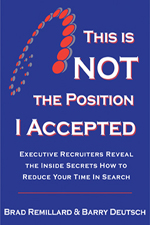
Both of these are marketing documents. That is all a resume is. It is put together to market you. In our best selling job search workbook,“This Is NOT The Position I Accepted” we don’t like to use the word “resume.”  Rather, we prefer to call it your Personal Compelling Marketing Brochure.

Your LinkedIn profile is your online marketing brochure. It must sell you. Your profile can be even more compelling than a resume because of all of the added features LinkedIn allows you to add to your profile. Most are not possible on a resume.

So here is the next set of questions, “How many hours have you dedicated to developing your resume?” My experience is that most candidates spend hours not only developing their resume, but revamping it, changing it, redoing it, updating it, and so on. For many, this is a never ending process.

OK, so then, “How many hours have you dedicated to developing your LinkedIn profile?” We would really like you to be completely honest and answer these questions. Just add your responses to them in the comment box at the bottom.

Still  not convinced about why you need a great and compelling profile on LinkedIn?  Here are some additional reasons that might convince you.

  • For my last three placements, all of the candidates came directly from LinkedIn.
  • Two clients recently told me they hired mid-level sales people directly from LinkedIn.
  • Before posting an open position on a job board, most recruiters go to LinkedIn first.
  • I’m currently working on two searches and I found all of the candidates using LinkedIn.
  • LinkedIn now has over 45 million users.
  • More and more internal recruiters and HR professionals start their searches on LinkedIn.
  • Companies can save thousands of dollars searching LinkedIn versus searching resumes on a job board.

Given all of this, would you reply to a job posting with a fair resume? Would you expect a call back from a hiring authority or recruiter if your resume was “fair?”

If your LinkedIn profile isn’t better than your resume, you are leaving a very valuable tool in your tool box. When I’m coaching job seekers, one of the first items we work on is their LinkedIn profile. It is not uncommon that within two weeks of completing the profile makeover for these candidates, that they start receiving inquiries.

So let us hear from you regarding how you responded to these questions. We are really interested.

Don’t know how to build a great profile?

Get a FREE LinkedIn Profile Assessment. To help you build a great LinkedIn job search strategy, we are having a webinar on March 26. This webinar will ensure you not only have a great profile, but in addition, teach  you how to find contacts, how recruiters use LinkedIn, and how to ensure that if someone comes to your profile that you are positioned as the expert.  CLICK HERE to learn more.

Also, Barry and I have had extensive discussions regarding LinkedIn on our weekly radio show that airs every Monday at 11 AM PST at www.latalkradio.com on channel 2. We add all of these recordings to our audio library. These recordings are free for you to listen to or download. CLICK HERE to review our audio library.

Finally, consider joining our LinkedIn Job Search Networking Group. There are more than 4,4oo members, and a wealth of articles and discussions to help you in your job search. CLICK HERE to join.

Brad Remillard

How to Improve Your LinkedIn Profile: Job Search Tactic #1

How can you improve your LinkedIn Profile for a more effective job search?

Brad and I have talked endlessly about how much easier your job search is to found than to find a job. I recently wrote a post on this exact subject.

We did a radio broadcast on how to improve your LinkedIn Profile. We posted our LinkedIn Self-Assessment Scorecard on our site a few months ago -  a download that has become one our all-time most popular downloads. You can get the download and quickly understand how to improve your LinkedIn Profile for Job Search.

Not only is building an outstanding LinkedIn Profile a job search best practice, but it is also an integral part of personal branding (another key element of an effective job search).

More importantly, every recruiter, HR pro, and hiring manager will google your name and look up on LinkedIn BEFORE they decide to grant you an interview.

Google Profiles will be the focus of our next blog article, Job Search Tactic Number 2.

  • Does your LinkedIn Profile capture a viewer’s attention?
  • What elements of your Profile are they drawn to?
  • Would I as recruiter feel that I just had to call you after viewing your profile?
  • Does your profile scream “you’re not going to find a better person” at me?
  • What are the steps in creating an effective job search LinkedIn Profile?

Below we’ll list the key elements of creating an effective profile. We could probably spend an entire blog post series on each element of your LinkedIn Profile.

Here are the LinkedIn Profile Best Practices (in no particular order)”:

  1. Use a compelling headline
  2. Complete all the details of your entire career
  3. List all your accomplishments in detail with as much quantification as possible
  4. Get a lot of recommendations
  5. Recommend others
  6. Include Slideshare Powerpoint presentations of your accomplishments
  7. List the books you’re ready/comment on other book lists
  8. Incorporate Your Twitter Feed and Link
  9. Include a link to your blog
  10. Include a link to your on-line resume
  11. Pull your blog’s feed onto your profile using Wordpress
  12. Include links for audio/video files of you talking about your accomplishments and achievements.
  13. Join Groups that are professionally/geographically appropriate
  14. Update your status frequently – as in daily
  15. Dramatically build your network with appropriate contacts
  16. Make it easy to connect with you – phone #s and email

These are the elements of your LinkedIn Profile that will differentiate you from your peers. Read a couple of our other blog posts on this subject of leveraging your LinkedIn Profile for Job Search, including an article titled “Become a Beacon in Your Job Search” and “Are You Difficult to Connect With on LinkedIn in Your Job Search?

Barry Deutsch

Don’t forget to join our LinkedIn Job Search Discussion Group to learn more about leveraging your LinkedIn Profile for Job Search.

It’s play-off time for your job search – what do you have to lose?

Are you conducting a job search like it's the last 5 minutes of your championship play-off game?

Here comes another basketball metaphor about your job search.

A few nights ago, my Varsity HS Girls Basketball Team played in the first round of the State Playoffs. In our section we were ranked 6th out of 32 teams. We played a team ranked 24 and almost lost.

Why? It should have been an easy win – a no-brainer.

At playoff time, teams change – they go from being conservative, playing careful, doing the same old thing, and usually playing within their capability. At playoff time, lower ranked teams hike it up to whole other level. They play with complete abandon – and give it a 110%.

What do the lower ranked teams have to lose? If they don’t win, their season ends right now. And if they can pull off one more win – they get to come back and play another game. Many upsets occur, because lower ranked teams fight as hard as they ever fought, they do everything they can to influence the outcome, and they leave nothing on the table.

If you asked the team last night that lost to us in the last 5 minutes of the game if they had any regrets – if any of the players felt they had not played as hard as they could – and the answer would be an overwhelming “I gave it everything I could”.

When asked that question, our higher ranked girls would have said there was a lot they could have done and they were disappointed in their performance since they didn’t “work hard enough”. They were coasting on their high ranking, thinking their past track record could speak for itself.

Are you guilty of this dysfunctional thinking in your job search?

If you ask most candidates that question about their job search, I would predict that most candidates would have significant regrets about their commitment, energy, and intensity regarding their job search.

Most candidates are not willing to “go beyond the call of duty” in their job search.

Most candidates could not claim that they have “outworked their peers” in their job search.

Most candidates are just doing the same thing over and over (Benjamin Franklin’s Definition of Insanity).

No wonder the typical executive/senior management job search is now significantly over 6 months. Here are some questions to ponder about your job search:

  • What are you doing in your job search that your peers are unwilling to do?
  • What are doing this week that represents a high level of energy, commitment, and intensity in your job search than last week?
  • How would you quantify the effort and intensity of your job search?
  • Shouldn’t you be treating your job search like it’s play-off time and it’s the last 5 minutes of what could be the last game of the season or your entire career?
  • Are you going beyond the call of duty in your job search?

What could you be doing differently that would represent a higher level of commitment, energy, and intensity?

This is just a small list of the hundreds of things you could be doing in your job search to reduce the time it takes to find a great opportunity. Most of your peers are unwilling to invest the time to do these job search best practices. Are you willing be to do what it takes to win – to go beyond what most of your peers do in their job search – or would you rather coast in the middle of the pack?

Have you downloaded our FREE Job Search Preparation Scorecard to see if you’re doing everything you can to conduct an effective job search?

What’s holding you back from pouring everything you’ve got into your job search?

Barry Deutsch

Jump into the Questions and Answers in our popular LinkedIn Discussion Group to discover what some candidates are doing that truly represents an effort to go “beyond the call of duty”.

Don’t Be the Candidate Screened Out by a Recruiter’s First Question

Candidate being REJECTED after the first interview question - Don't let this happen to you

In my last blog post, I described how the best recruiters screen out the vast majority of candidates for their search assignments through one simple question.

Don’t be the one who gets screened out in 30 seconds.

Many times these are great opportunities the recruiters are working on – you’re the perfect candidate for that appropriate position – you definitely do not want to miss out.

What can you do?

I’m going to suggest that there is a simple approach you can use to prepare for interviews, and it mirrors the cover letter strategy.

If the advertisement does not point out precisely what is required in the position, you can make the fair assumption that there are 3-4 primary elements to every senior professional, managerial, and executive position. Putting your comparable accomplishments to each of these core elements of a position in the cover letter, and being ready to address them in the interview is an insurance policy against being screened out prematurely by recruiters.

Let’s run through a few examples:

If you are applying for a CFO/Controller/Director of Finance position in an entrepreneurial to mid-sized non-public company, the primary expectations over the first year will probably include:

1. Process Improvement – reducing the closing process, improving financial reporting, inventory control process changes, order entry processing speed/efficiency.

2. Financial Planning/Analysis/Forecasting – improvements to budgeting, annual planning, cash flow management, strategic planning, monthly analysis, monthly and quarterly projections.

3. Operational Projects – conducting special one-time analysis on leasing equipment, facility optimization, capital investments in equipment, customer profitability analysis, viability of new products, services, markets, analysis of warranty reserves, and cost reduction opportunities.

4. Policies/Procedures/Asset Protection – improving/changing the handling of cash, tracking of fixed assets, credit policies, collection management, purchasing and material management.


If you are applying for a Marketing Manager position at a sub-component manufacturing company, the primary expectations over the first year might include:

1. Marketing/Sales Materials – review and improvement of all collateral material used by the sales team.

2. Business Growth – assessment and recommendation of new markets, products, and services. Launching and managing existing and new services and products.

3. External marketing – branding, positioning, messaging, advertising, and trade shows to increase awareness and recognition in marketing to OEM manufacturers.

4. Lead generation for the sales function – database marketing, trade offers, channel management, website, lead management tools.


Tell us what the 3-4 primary success factors are in your functional role for the type of industry/type of company that you are focusing your job search on.

We’d like to see how many job seekers understand the critical components of being successful for the type of position they are seeking.

Now let’s jump back to the first interview question a recruiter poses to you in the initial phone call:

My client’s closing process takes too long. They need this individual to reduce by 50% the time it takes to close their books on a monthly basis.

Amazing. Astounding. The recruiter is blown away. You’ve got 2-3 great examples of where you solved similar/comparable process problems/obstacles.

Let’s try another one:

My client is looking at expanding their regional electro-optical sub-component business nationally. Do you have 2-3 comparable examples you could share about moving a company into different markets against entrenched competition?

Amazing. Astounding. Once again the recruiter is blown away by the 2-3 examples you’ve shared about successful marketing efforts to move your prior companies into new markets.

The recruiter is doing their job asking the tough questions based on client expectations of success. A little preparation and understanding of what the most common obstacles/problems/opportunities someone in a specific role is going to face will allow you to ace the vast majority of “appropriate” interviews.

Keep in mind that if your background is primarily in marketing management and you’ve done very little in sales management, I’m probably going to quickly screen you as inappropriate for this executive search for a sales management job. If you’re essentially a channel marketing director, I’m probably going to quickly exclude you from consideration for the marketing role in my client’s direct sales model.

The key word is “appropriate”.

One of the greatest frustrations we hear from employers/recruiters is that the vast majority of candidates from whom the receive resumes/calls ARE NOT APPROPRIATE” for their openings on a very basic level – this brings us back to a previous blog posting where I made the outrageous suggestion to stop shot-gunning your resume to jobs that are totally inappropriate and focus your search efforts on “appropriate jobs”.

The shot-gun approach to responding to job advertisements/recruiter job announcements is a complete waste of time. Okay – a miniscule number of candidates will occasionally get lucky – after all – even a blind squirrel will get a nut sometimes. However, do you want to base your job search on “luck” or on a systematic – methodical – structured approach validated as generating consistent results?

You make the choice! If you’re not obtaining decent results from your current shot-gun approach of scattering resumes every time you come across a key word – perhaps it’s time to try a test and see if a more focused effort would generate better results.

Now that I’ve repeated myself for the 100th time on the worthless approach of conducting a shot-gun job search, let’s return to the primary focus of this blog post.

Let’s assume you get screened out for an “appropriate” role.

Shame on you for letting that happen.

If you’ve taken all our recommendations in our FREE Archive of job search best practices including such items as preparing a great job search plan, developing an outstanding LinkedIn Profile, consistently and effectively leveraging cover letters, and investing extensive time in the preparation for an interview – then there is NOT a recruiter, HR staff person, or Hiring Manager who CAN deny you the opportunity to be considered.

NOW we come to the real issue behind why you get screened out for “appropriate” openings on the first recruiter interview question (forget all the  “inappropriate job responses” – you should be immediately screened out for these) – you didn’t do your homework – you didn’t apply the best practices in conducting you job search -  you basically “winged-it”.

STOP being screened out prematurely for openings for which you are perfect. STOP letting this happen. Make a resolution right now that you will never allow yourself again to be screened out prematurely for an “appropriate” position.

START today in changing the way you conduct your job search. Take our entire FREE Archive of Audio Programs, Templates, Examples, and other tools – and start transforming your job search. After you swallow that overwhelming amount of FREE content from us – start extracting the FREE content from all other great career coaches and recruiters on the internet.

STOP complaining about your ineffective job search and the obstacles you are facing. There is an extraordinary amount of great content available to you that is either FREE or can be acquired for a minimal investment. Every candidate I have met in this horrific job market that invested time in discovering and using job search best practices has dramatically reduced the time it took to land a great job.

WHAT IS HOLDING YOU BACK?

DO YOU FEEL YOU KNOW EVERYTHING THERE IS TO KNOW ABOUT CONDUCTING AN EFFECTIVE JOB SEARCH?

ON A SCALE OF 1-10 (10 BEING THE HIGHEST) ARE YOU DOING EVERYTHING YOU COULD BE DOING TO CONDUCT A MORE EFFECTIVE JOB SEARCH.

In this blog post, we just took one tiny element of conducting a more effective job search: How to NOT get screened out by recruiters for appropriate positions in their first interview question.

There are hundreds of activities, tactics, strategies you could use to conduct an effective job search.

Barry Deutsch

Jump into the vibrant dialogue in our LinkedIn Job Search Discussion Group on the most common basic best practices of conducting an effective job search.

Job Seekers Should Stop Being So Hypocritical

For 30 years this September, as both a contingent and retained recruiter, I have listened to the complaints by candidates (job seekers) about hiring managers and the complaints by hiring managers about candidates.

Even after 30 years, as I read blog comments, or sit in a chair and listen to these complaints, I’m still amazed (yes, amazed) at the hypocrisy spewing out from both candidates and hiring managers.

I read the comments to our blogs where candidates complain about the black hole when they send resumes, they complain about how long it takes to fill a position, they complain about recruiters, they complain about not getting their calls returned, they complain that their resume doesn’t get read in great detail, they hate the 10 second resume screen, they complain about cover letters, they complain about how these hiring managers are missing qualified people, they complain that the interview wasn’t fair or too short or too long, and that the person conducting the phone interview wasn’t qualified and didn’t know the job. This list could fill a book about the size of War and Peace, or for those not into War and Peace, book seven of Harry Potter.

Sound at all familiar if you are seeking a new position?

I then listen to hiring managers, HR, CEOs and key executives who are doing the hiring complain that, I get too many resumes, I get tired of interviewing average candidates, I will get to those resumes this weekend or next weekend, the resumes don’t match my job, candidates don’t know how to interview, candidates can’t put together two complex sentences, they complain that recruiters aren’t screening tight enough, they complain recruiters are screening too tight, they get angry at the recruiter for wasting their time interviewing unqualified candidates, they rule a qualified candidate out because they didn’t like the way they sat in the chair (I’m not kidding), they rule a candidate out because his tie was not straight (No, I’m not kidding), give me a job spec so tight and narrow that they themselves (this person’s boss and direct report) wouldn’t be qualified, tell me that from a 15-minute interview this person won’t fit, isn’t assertive enough, or my favorite, the candidate isn’t a  team player (so I ask, “What teams will they serve on?” Answer, “Well not right away, but probably in the next two years.”) They also don’t like the candidate’s handshake, or for this sales position the person needs to be a real go-getter, outgoing and aggressive (so then I ask if they like being approached by outgoing, aggressive sales people and they reply, “No, of course not.”) I could fill another book the size of War and Peace with these complaints.

Then I realized in both cases,  I’m talking with or listening to the exact same person.

Job seekers become hiring managers and hiring managers become job seekers.

The problem is that when they move from one side of the desk to the other, their perspective changes, their needs change, their priorities change, and it is a whole new ball game. Hiring, whether it’s a candidate or hiring authority is “all about me” and “what’s in it for me?”  That is just the way it is. Right or wrong, good or bad, like it or not, that is the fact of hiring.

So the next time, before you complain, from either side of the desk, please take a step back, look at yourself and treat the person on the other side of the desk with the same respect you complain about.

I know, I for one, would surely appreciate it.

You can download many free tools from our Web site. Our most popular free resource is the sample cover letter. CLICK HERE to get one.

If your LinkedIn profile is just fair to average download our free LinkedIn profile assessment to help you build a great profile that gets you noticed. CLICK HERE to download.

You should also join our LinkedIn Job Search Networking group. This group had 3,900 members. The articles and discussions can only help you with your job search. CLICK HERE to join, all are welcome, and of course it is free.

I welcome your thoughts and comments. Good or bad, agree or disagree, all voices are welcome. Just be respectful.

Brad Remillard