Posts tagged: Online Profiles

Building An Effective Network Step 2 – Online Social Media & LinkedIn Profile

Step one of effective networking focused on the offline networking process. It discussed why so many candidates receive such little value from networking that most just give up. I understand why this happens and hopefully the 4 steps started to change how most candidates approach networking.

Online networking is becoming more and more an effective way to connect. I personally don’t believe it is even close to as effective as offline networking, but one has to make sure that this base is covered. Just like the offline networking that we described in Step 1, it too must be covered effectively. Just doing it for the sake of doing it will not be any more effective in your search than meeting a bunch of people and going to a lot of networking meetings just for the sake of doing it.

There are very few things one can do poorly and expect anything other than poor results. Yet, this is what many of the candidates I encounter expect given their networking process.

Online networking takes effort. It is much more than just filling in the blanks on your LinkedIn profile and then hoping a recruiter or hiring authority will see it and think, “WOW, what a great person, I need to contact them now.”  I recently conducted a small poll asking approximately 500 people how they would rate their LinkedIn profile. To my surprise, most were completely honest and rated it poor to below average. A few rated it good and one or two rated it excellent. Of those that rated it good and excellent, four made the mistake of asking if I agreed and wanted my opinion. Don’t ask me for my opinion if you don’t want a complete answer. When I finished writing my assessment of their profile, all agreed that their profile needed work and was incomplete and therefore ineffective.

Here are some things to consider when building an online network and how to fully utilize it:

  1. Limit your expectations. LinkedIn and other social media sites are not a silver bullet for finding a job. They are definitely an important component, but don’t over rely on them. Offline networking is still at the top of the list when searching for a position.
  2. I cannot stress enough that you need to make sure that you not only have a complete profile on LinkedIn or Google, but also make sure it is compelling. This is your home page. Make sure it demonstrates that you are the expert in your field. Do an analysis of your competitors just like companies do. Review other profiles in your functional area. See what they have to offer. How does their profile compare to yours? If you looked at both profiles, which person would you contact first? Be objective.  CLICK HERE to get a FREE checklist to building a compelling profile.
  3. A profile is meaningless if you still aren’t findable. What steps are you taking to make yourself findable? (Part 3 in this series). How sure are you that if my team of recruiters was searching for you that they would find you? This is what counts.
  4. Once they do find you, how difficult is it to connect with you? This is a major issue. Most candidates don’t understand the process LinkedIn uses to connect people. If we aren’t connected at the first level and you don’t have your contact information displayed on your profile, LinkedIn makes it difficult to connect with you. In addition, the way their system works it can take days to make contact.
  5. Have you Googled your name and reviewed what shows up? Most have done this. Do the results link the person Googling you back to your LinkedIn profile? This can be a problem if you have a common name. Bob Smith, Jane Jones, Mark Roberts may have hundreds of names show up. It can take a long time to find you.

Online networking is a good thing,  however, it is often over relied upon by candidates. Too many candidates believe that if they build it, people will just find them. This is just not true. I wish it were, as that would sure make my job easier. You have to work your profile. You have to get it out into the marketplace.

The good news is few candidates do this. If you do, you will be the one that gets the call.

You can get our Create a Powerful LinkedIn Profile To Find a Job webinar package. This includes all of the slides and the audio recording. The audio is an hour and a half and there are more than 30 slides that will walk you through step-by-step and show you exactly how to build a compelling profile. CLICK HERE to read more.

Join our LinkedIn Job Search Networking Group. 5,300 members are there for you to connect with. CLICK HERE to join.

I welcome your thoughts and feedback.

Brad Remillard

How Recruiters Search Using LinkedIn & What We Look For

So much has been written on the importance of a complete and compelling LinkedIn profile.  I am currently working on two searches for which I am extensively using LinkedIn to source candidates. From what I have seen, one would think that LinkedIn is either a new or non-essential tool. Nothing could be further from the truth.

In the last two weeks, I have looked at well over three hundred profiles on LinkedIn. Only one thought comes to mind and I hope I speak for most recruiters (internal and external) when I say, “What a major disappointment!” or “Now I understand exactly why so many candidates are in transition so much longer than necessary.”

I firmly believe that most profiles are viewed, and then passed over time and time again. Most  LinkedIn members who are looking for a position don’t even know how many times someone has reviewed their profile and never contacted them simply because their profile completely, “SUCKS.”

Profile after profile indicated “open to being contacted for career opportunities,” but the profile wouldn’t even include the person’s name!

If that isn’t  ridiculous enough,  my favorite examples are the ones that state in the headline, “Unemployed or Actively Seeking a New Position.”  One would think that since this person took the time to announce to the world that they are in transition, that they would at least upload their resume. But “NO.”   OK,  surely they will at least complete their profile so people reviewing it will know what they do?  Nope, why let recruiters and others searching for candidates have this information?

Give me a break,  do they expect me to engage them based on their picture? Are recruiters supposed to just know this information via osmosis?

Here is how I search for candidates on LinkedIn. I hope this will help you as well as help recruiters help you.

  1. I start out using the advanced search feature for people.
  2. I want to throw a wide net.  My goal is to be inclusive at this point, rather than to exclude someone.
  3. I usually start with just a few criteria. Generally, title, location (I use zip code and 50 mile radius), industry and function. That is it.
  4. There are exceptions to this but this is the starting point.
  5. I leave all other fields set to the  “All . . ” category in the drop down boxes. Meaning search all my groups, search in and out of my network, etc. I want a wide net.

Generally, hundreds of profiles appear. Now the search really begins, as does the frustration.

I begin scanning through the summaries of the profiles that appear. There is not a lot of information in the summary but enough to give the reader a good idea of whether it’s worth it to view the person’s full profile.

So often there is no need to even review a person’s profile. I can tell just from the summary that the information on the profile is either missing or completely worthless. For example, no picture, no name, no companies listed, vague titles, no contacts, background missing, no work history, etc. Yet, they want to be contacted for career opportunities.

Once I start looking at the profile, I usually decide in about 10-20 seconds if I should click out or read on.  So many profiles are so incomplete that I wonder why this person even took the time to post a profile. What exactly were they expecting when they posted this worthless profile?

I also look at the picture to see if it is professional or one that will embarrass me for referring the person if my client views it. That’s assuming there is a picture at all.

I then begin looking for the box checking stuff my client is requiring such as education, experience, current or past titles, years of experience, level, etc. You can read more about this in an article I wrote, “How Recruiters Read Resumes In 10 Seconds or Less.” Click here if you are interested.

I also look for recommendations and may read some. What are others saying about you? If nobody is willing to say anything good about you, it certainly isn’t a knock out, but I am curious about that.

I will also scroll down the profile summary and work history, and if a resume is uploaded I will review it. Rarely is a resume uploaded. Most of the time this is where it ends. The profile is so incomplete, the work history so brief, the description of work so worthless, that I can’t figure out what they were responsible for.  The profile has little or no company information, so I have no idea if their past companies were even in the right industry. Finally, the summary at the top is meaningless. Most don’t even include specialties.

I scroll to the very bottom and sure enough they want to be contacted regarding career opportunities. Some are even helpful at this point and will say, “Prefer to be contacted on my cell phone.” or  “Please use my personal email address.” Neither of which are included in the profile. Hey, I can’t make this stuff up.

GOODBYE. I have better things to do and a lot more people to consider.

This person probably just lost a great opportunity, or at the very least an opportunity to discuss a position. Even if they aren’t interested,  just knowing what is going on in their market is helpful. Just getting a feel for comparable compensation is a good data point for anyone to know.

The lunacy doesn’t end here. At least 50% of  these people are not working. Their work history will be 2007-2009.  What planet are they on? I’m sure they are frustrated, and complaining about how long they have been out of work and how bad the market is. This may be completely true, but they aren’t helping themselves with their profile.

If this search fails to produce viable candidates, I will go back and change the title or industry and try again. Not necessarily change the search, just some of the criteria. I’ll try to throw a wider net in a different part of LinkedIn’s membership.

Finally, I may eventually search by company name. If I know of a specific company that is right, I will search using the company name. That brings up all of the people that are currently working for this company or have in the past.

This is why your complete and compelling profile is so important on LinkedIn.  In today’s world, the search for candidates so often starts on LinkedIn. The sad part is, it also often ends there too.

Take away nothing else from this article but this one thing: In today’s market, companies (right or wrong) are looking for the kings and queens in their field, not the jack of all trades. If your profile doesn’t shout out loud and clear, “I’m an EXPERT,” you may be missing opportunities. Sadly, this happens and it is so easy to fix.

On March 26th we are having a webinar on how you can leverage LinkedIn to find your next job. We believe this is the most comprehensive webinar we have seen on this topic. We’ll have over 35 slides (we’ll give you all the slides) on how you can build a compelling and complete profile. We will show you step-by-step where the tools are and how you can use them to be the “EXPERT.” These slides and the audio recording of the webinar are included. If you want a profile that puts you in the top 10%, then you should CLICK HERE to learn more.

At a minimum you should download our 8-Level LinkedIn Self Assessment Profile. This tool is a great start towards building a great profile. CLICK HERE to get yours. It is 100% free.

Finally, if you are on LinkedIn, join our LinkedIn Job Search Networking Group. There are more than 4,800 members in the group. It is one of the fastest growing groups on LinkedIn that focuses on job search issues. CLICK HERE to join.

I welcome your thoughts and comments.

Brad Remillard

Your LinkedIn Profile May Be More Critical Than Your Resume In A Job Search

This is an important discussion that I believe will accelerate over the next few years, especially for professionals and those in managerial positions. However, I still believe that the discussion is very relevant for all others.

Right now this is the, “which came first the chicken or the egg” argument.

So what do recruiters, HR, and hiring managers screen with first? Your resume or your LinkedIn profile?

One side might argue the resume. The candidate emails the resume or replies to a job posting. The person screening reviews the resume and makes a decision to follow-up or not. So in this example the resume was the deciding factor.

The other side would argue that, more and more before companies incur the expense of posting an ad, they first go to LinkedIn. This is especially true for recruiters. They first go to LinkedIn, and if they can’t find a person on LinkedIn they will post an ad. So here LinkedIn is the most important.

As a retained executive recruiter and job search coach, I would take the position that both are important, but LinkedIn is rapidly passing up the resume, and is at least equal to it.

I take this position because so often, and it is increasing at an alarming rate, after the person screening your resume reads it, the next stop is LinkedIn. They want to see your profile. My partner, Barry Deutsch, and I are being told more and more by our clients that this is what they are doing. I just wrote an article about how one of my clients was considering hiring a person until they looked at their LinkedIn profile. BTW, this is becoming true not only for LinkedIn, but for all social networking sites including Facebook and Twitter.

People screening  your resume are becoming more savvy about LinkedIn. I’m not referring to recruiters. We have been using LinkedIn for years. With the explosive growth of LinkedIn due to the recession, companies are rapidly realizing the enormous value of LinkedIn. So much so, (call me crazy) but I believe that within the next few years, the need for resume databases on the job boards will become secondary to social media sites. After all, why would a person pay almost $10,000 to search a database of resumes when the information is free on LinkedIn and other sites? In a world of cost cutting, eliminating this cost just makes sense to me.

So what does this mean to the job seeker?

1) Make sure  you have a very complete and compelling LinkedIn Profile. A compelling and complete profile can literally change your search overnight. I have seen this happen with people I do job search coaching with. Unfortunately, only about 10% currently have a compelling and complete profile. That is why when you have one, you stand out.

I can’t stress this enough. 90% of most profiles on LinkedIn are at best fair and most are so incomplete they are worthless.  What a golden opportunity to position yourself as the “expert” in  your field. In today’s market, companies are searching for the expert. That can be you. LinkedIn has the tools for you to do this. Why so many don’t take advantage of these FREE tools is beyond me. If you know “WHY” please enlighten me.

2) Don’t forget Facebook, Google profiles, and Twitter. These are often overlooked. Why not have a Facebook page that focuses on you as a professional? Use it for your job search, rather than socially. There is an awful lot  you can do on Facebook to stand out.

3) Twitter is a great tool that builds awareness. It is easy to use and gives you  great exposure. Plus, you can link your tweets back to your LinkedIn status. Now you are killing two birds with one stone.

You have an outstanding opportunity right now (but the window is rapidly closing) to stand out on LinkedIn and be the “EXPERT.” So many people today have such poor profiles that you should take advantage of this by creating a great profile.

How often in your job search have you heard the phrase, “You must differentiate yourself.” Well, this is your opportunity to do so. Why would anyone leave this gaping hole in their resume?

You might qualify to receive a FREE LinkedIn profile assessment, valued at over $300. On March 26th we are having a webinar on how you can leverage LinkedIn to find your next job. We believe this is the most comprehensive webinar we have seen on this topic. We’ll have over 35 slides on how you can build a compelling and complete profile. We will show you step-by-step where the tools are and how you can use them to be the “EXPERT.” These slides and the webinar audio recording are included in the webinar. If you want a profile that puts  you in the top 10% then you should CLICK HERE to learn more.

At a minimum you should download our 8-Level LinkedIn Self Assessment Profile. This tool is a great start to building a great profile. CLICK HERE to get yours. It is 100% free.

Finally, if you are on LinkedIn, join our LinkedIn Job Search Networking Group. There are more than 4,800 members. It is one of the fastest growing groups on LinkedIn that focuses on job search issues. CLICK HERE to join.

I welcome your thoughts and comments.

Brad Remillard

Who Cares What Your Status is on LinkedIn? Job Search Tactic #4

Your network clapping for you - cheering for you in your job search

Lots of people care!

Your network wants to be given an opportunity to clap for you!

That’s why you should be updating your status every 24-48 hours.

  • Your network wants to know how your job search is progressing
  • Your network wants to know the type of companies with whom you’re interviewing
  • Your network wants to know the executives with whom you’re interviewing
  • Your network wants to know the techniques you’re using to generate job leads and referrals

They want to hear about the silly interview questions you’ve been asked, the most intelligent questions, the ones that were easy and ones that stumped you.

Your network wants to be able to support you in your job search. If they don’t know what you’re doing, how could they possibly support you?

Status updates are the amazing simple short statements about what you’re doing that you feel is important to share with you network. You have 140 characters to type a status update. Each time you type a status update, everyone in your network will see it on their home screen when they view network status updates.

This is one of the most powerful tools LinkedIn offers and yet, very few networkers use it – forget effectively – they don’t bother to update their status at all – what a waste of a free networking tool.

I am a master networker. Many of you know that I am a LinkedIn Networking Expert. I teach and coach networking to some of the most successful coaches, CEOs, Presidents, and senior executives. How does a master networker and LinkedIn Networking Expert use status updates in social networking?

SECRET HINT: Think of your status updates as frequent alerts to keep your network aware of what you’re doing, how it might impact them personally, and as a “marketing” tool to keep your “brand” in a top-of-mind presence with them every single time they log onto LinkedIn.

Every day or two, I take a moment and I type a short statement about something I think a large portion of my network on LinkedIn might like to hear about.

  • Have I just written an interesting new blog post
  • Have i just attended a life-altering workshop on self-motivation
  • Did I just read a passage from Daniel Pink’s new book, Linchpin, that I wanted to share before I forget it

Are the 3 ideas I got out of the on-line webinar this morning that Brad Remillard taught on Leveraging LinkedIn in your job search (you like the way I worked that shameless plug into my blog post?) valuable to share with others?

All kidding aside,

My partner, Brad Remillard, will be leading a powerful webinar on March 26th to teach you how to leverage all the LinkedIn tools  to find your next job through LinkedIn.

CLICK HERE to sign up right now for this unique LinkedIn Job Search webinar.

Only our private job search network of loyal readers here on our blog, in our LinkedIn Discussion Group, and those who have downloaded our FREE Job Search Tools will receive this special discount.

If you get ONE great idea from this webinar on how to improve your job search, it will have been worth the investment of time. NOT ONLY will you get one idea, I’ll guarantee you’ll get a dozen ideas that you can immediately implement within hours of completing the webinar.

After you finish the webinar, Brad and I would love to hear about the 12 different things you started doing on LinkedIn, such as updating your status more frequently, and which ones immediately started to work for you.

Barry Deutsch

PS – would it help if we put together a status update checklist (like a daily dozen status update ideas) that you could use every day to go down the list and say “I did #2 yesterday, today I’ll do #9)?

Is Your LinkedIn Profile Hurting Your Job Search?

At a recent Vistage meeting of about 20 CEOs we were discussing using social media as a way to find people.  One of the CEOs indicated it is also a great way to eliminate people.

I wasn’t overly surprised to learn that many hadn’t thought about social media for hiring, but I was surprised to learn that many don’t use it as a screening tool. Obviously, after hearing the story from the one CEO, most will reconsider.

The CEO stated that they had been in the process of interviewing a candidate for a sales position, and like most hiring processes, it takes a couple of weeks to get through all of the interviews. Over this couple of weeks the company started tracking this person’s tweets on Twitter and looked up the candidate’s profile picture.

OOPS a major faux pas.

Apparently as it was relayed in the meeting, this person’s picture was – let’s just say not professional, and the tweets were completely inappropriate as viewed by the company. The language was foul, the topics discussed rather vulgar, and for a professional sales person raised a lot of red flags.

The company was afraid of a sexual harassment lawsuit and how this candidate would communicate with employees and customers. Not to mention what customers would think if they saw this person’s profile picture and followed them on Twitter.

Social media is a double-edged sword. I follow Twitter on a regular basis, and I am surprised at how many people looking for a job use inappropriate language, brag about being lazy, tweet about how glad they are about not working, or demonstrate a lack of willingness to be employed. They come across as wanting a job but not willing to work. This is not what a future employer is seeking.

Take care to ensure that you manage your LinkedIn profile properly and professionally during your job search. Others are watching and listening to you.

If this was helpful to you, it will probably be helpful to others. Please consider passing it on so they too can benefit. You might add it to your Facebook page, update it on your LinkedIn status, or email it to friends or to your network. We all need to help out. One tip can make a huge difference to someone.

GET A FREE LINKEDIN PROFILE ASSESSMENT. On March 26th we are offering a webinar on, “How To Find Your Next Job Using LinkedIn.” We will tell you the number one reason  so many recruiters view your profile and never call you. THIS IS NOT A JOKE OR HYPE. It is a fact that most candidates never think of. CLICK HERE to learn more about how to get your FREE profile assessment and the webinar.

Join our LinkedIn Job Search Networking Group and stay connected with the other 4600+ members. CLICK HERE to join.

I welcome your thoughts and comments.

Brad Remillard

How Would You Rate Your LinkedIn Profile?

I recently asked this question on LinkedIn, “How would you rate your LinkedIn profile?” The choices were, poor, fair, good or very good. I wasn’t referring to completeness based on the LinkedIn scale. I wanted to know how you would rate your profile based on how good or compelling it is.

Would a recruiter, HR professional, or hiring authority be so impressed that they can’t wait to contact you? That is the goal of a LinkedIn profile. Why else would you have one if you are in a job search?

So that is my question to you, “How do you rate your LinkedIn profile?” We would really like to know.

Poor

Fair

Good

Very Good

Now the really important question, “How would you rate your resume?” Let us know that too. Just simply send us a comment. You can do that at the bottom of this article.

Did you rate them both the same? Most rate their resume good to very good and their LinkedIn profile poor to fair. WHY?

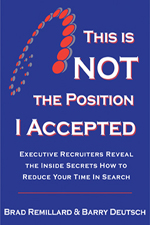
Both of these are marketing documents. That is all a resume is. It is put together to market you. In our best selling job search workbook,“This Is NOT The Position I Accepted” we don’t like to use the word “resume.”  Rather, we prefer to call it your Personal Compelling Marketing Brochure.

Your LinkedIn profile is your online marketing brochure. It must sell you. Your profile can be even more compelling than a resume because of all of the added features LinkedIn allows you to add to your profile. Most are not possible on a resume.

So here is the next set of questions, “How many hours have you dedicated to developing your resume?” My experience is that most candidates spend hours not only developing their resume, but revamping it, changing it, redoing it, updating it, and so on. For many, this is a never ending process.

OK, so then, “How many hours have you dedicated to developing your LinkedIn profile?” We would really like you to be completely honest and answer these questions. Just add your responses to them in the comment box at the bottom.

Still  not convinced about why you need a great and compelling profile on LinkedIn?  Here are some additional reasons that might convince you.

  • For my last three placements, all of the candidates came directly from LinkedIn.
  • Two clients recently told me they hired mid-level sales people directly from LinkedIn.
  • Before posting an open position on a job board, most recruiters go to LinkedIn first.
  • I’m currently working on two searches and I found all of the candidates using LinkedIn.
  • LinkedIn now has over 45 million users.
  • More and more internal recruiters and HR professionals start their searches on LinkedIn.
  • Companies can save thousands of dollars searching LinkedIn versus searching resumes on a job board.

Given all of this, would you reply to a job posting with a fair resume? Would you expect a call back from a hiring authority or recruiter if your resume was “fair?”

If your LinkedIn profile isn’t better than your resume, you are leaving a very valuable tool in your tool box. When I’m coaching job seekers, one of the first items we work on is their LinkedIn profile. It is not uncommon that within two weeks of completing the profile makeover for these candidates, that they start receiving inquiries.

So let us hear from you regarding how you responded to these questions. We are really interested.

Don’t know how to build a great profile?

Get a FREE LinkedIn Profile Assessment. To help you build a great LinkedIn job search strategy, we are having a webinar on March 26. This webinar will ensure you not only have a great profile, but in addition, teach  you how to find contacts, how recruiters use LinkedIn, and how to ensure that if someone comes to your profile that you are positioned as the expert.  CLICK HERE to learn more.

Also, Barry and I have had extensive discussions regarding LinkedIn on our weekly radio show that airs every Monday at 11 AM PST at www.latalkradio.com on channel 2. We add all of these recordings to our audio library. These recordings are free for you to listen to or download. CLICK HERE to review our audio library.

Finally, consider joining our LinkedIn Job Search Networking Group. There are more than 4,4oo members, and a wealth of articles and discussions to help you in your job search. CLICK HERE to join.

Brad Remillard

How to Improve Your LinkedIn Profile: Job Search Tactic #1

How can you improve your LinkedIn Profile for a more effective job search?

Brad and I have talked endlessly about how much easier your job search is to found than to find a job. I recently wrote a post on this exact subject.

We did a radio broadcast on how to improve your LinkedIn Profile. We posted our LinkedIn Self-Assessment Scorecard on our site a few months ago -  a download that has become one our all-time most popular downloads. You can get the download and quickly understand how to improve your LinkedIn Profile for Job Search.

Not only is building an outstanding LinkedIn Profile a job search best practice, but it is also an integral part of personal branding (another key element of an effective job search).

More importantly, every recruiter, HR pro, and hiring manager will google your name and look up on LinkedIn BEFORE they decide to grant you an interview.

Google Profiles will be the focus of our next blog article, Job Search Tactic Number 2.

  • Does your LinkedIn Profile capture a viewer’s attention?
  • What elements of your Profile are they drawn to?
  • Would I as recruiter feel that I just had to call you after viewing your profile?
  • Does your profile scream “you’re not going to find a better person” at me?
  • What are the steps in creating an effective job search LinkedIn Profile?

Below we’ll list the key elements of creating an effective profile. We could probably spend an entire blog post series on each element of your LinkedIn Profile.

Here are the LinkedIn Profile Best Practices (in no particular order)”:

  1. Use a compelling headline
  2. Complete all the details of your entire career
  3. List all your accomplishments in detail with as much quantification as possible
  4. Get a lot of recommendations
  5. Recommend others
  6. Include Slideshare Powerpoint presentations of your accomplishments
  7. List the books you’re ready/comment on other book lists
  8. Incorporate Your Twitter Feed and Link
  9. Include a link to your blog
  10. Include a link to your on-line resume
  11. Pull your blog’s feed onto your profile using Wordpress
  12. Include links for audio/video files of you talking about your accomplishments and achievements.
  13. Join Groups that are professionally/geographically appropriate
  14. Update your status frequently – as in daily
  15. Dramatically build your network with appropriate contacts
  16. Make it easy to connect with you – phone #s and email

These are the elements of your LinkedIn Profile that will differentiate you from your peers. Read a couple of our other blog posts on this subject of leveraging your LinkedIn Profile for Job Search, including an article titled “Become a Beacon in Your Job Search” and “Are You Difficult to Connect With on LinkedIn in Your Job Search?

Barry Deutsch

Don’t forget to join our LinkedIn Job Search Discussion Group to learn more about leveraging your LinkedIn Profile for Job Search.