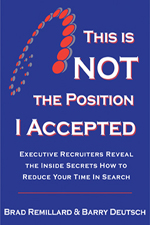
The title is true. It just isn’t true all of the time.
I can’t count the number of times I have heard from candidates, “I have done all of the things for your position.” or how many times I get a cover letter that goes into a lengthy explanation about “how perfect” they believe they are for my search.
One question, “If you are so perfect for the position, then why didn’t you get it?”
Skills and experience will only get you so far in the hiring process. At some point, usually much earlier than most candidates realize, these begin to diminish in importance.
What begins to increase in importance is your qualifications. This encompasses a lot more than skills and experience. Otherwise, why go through the interviewing process? If skills and experience were all that mattered, you would be hired just from your resume.
For example, let’s say that I received your resume and started reviewing it. At this point, skills and experience are 100% of my screening process. Once, I have read your resume and like what I read, I will then pick up the phone and conduct a phone screen. I don’t like to call it an interview, because quite frankly I’m in a screening mode more than an interviewing mode.
At this point, your skills and experience may now only be about 75% relevant. During this phone interview, it is true that I’m interviewing you on your skills and experience, but that isn’t all. There is so much more to a phone screen that it took a whole chapter in our candidate job search workbook to cover it all. This chapter is so important that we offer it for free for everyone to download. CLICK HERE if you want to download it.
If that goes well, the next step is going to be a face-to-face interview. Now your skills and experience are at best 50% relevant. Since I have read your resume and conducted a phone screen, I have a really good feel for whether you meet the minimum criteria or not. The interviewing priorities shift. There are so many issues I’m screening on to decide if I will send you out to my client that I can’t list them all. This took too many chapters in our job search workbook to properly cover and with the depth needed, I can’t possibly go into all of them, but here are a few. I’m interested in much more than just your skills and experience. I’m also interviewing for how professional your presentation is, how well you can communicate, whether or not you can withstand probing questions on your background, do you have the facts on your accomplishments, do you answer questions in vague generalities or can you get specific, and even how strong or weak your first impression was. I’m paid to make value judgments regarding how well you will fit with the company, if you are prepared for how my client will interview you (are you prepared or just winging it) and whether or not you will embarrass me once you are in front of my client. It only takes once in a recruiter’s career to have a client call back and complain that the candidate wasted their time, before the recruiter improves their screening process. These are really the basic things I’m screening on in our in-person interview. Only about 50% pass this interview.
That means half will never meet the hiring authority. Even though they have the experience and skills required, they may not be qualified. Now of this 50%, some will turn out to not be a good match, and often the candidate will agree. Usually, that is less than 10% of the total people I have interviewed in-person.
I can assure you it works about the same when you are interviewing with companies. The only major difference is that as the interviewing process progresses the percentage of reliance on skills and experience decreases even more.
For some senior level positions that require more than 4 or 5 meetings, this percentage may dwindle down to as little as 10% or less.
As the interviewing process moves forward, the hiring authority has already come to the conclusion that the candidates have at least the minimum skills and experience to do the job. Otherwise, they would have been eliminated.
What I’m trying to stress in this article is that candidates rely too much on their skills and experience to the detriment of what is important at different points in time during the hiring process. It isn’t always about your experience. At some point the question is, “Are you qualified?” It is more about your personality, behavioral issues, managerial style, communications, professionalism, professional presence, assertiveness, etc. that really matters.
These are the things most candidates take for granted during the hiring process. I have encountered so few that grasp these at the actionable level. Many reading this article will be thinking to themselves, “I know all of this.” That is the point of the article and the frustration. You may know all of this, but what are you doing about it to ensure that you pass?
How are you preparing?
How are you improving your ability to succinctly communicate your accomplishments?
What tangible things have you done to become a salesperson? After all, in a job search you are in sales.
Have you ever video recorded yourself in a mock interview?
What unique and probing questions do you ask in an interview that demonstrate that you are an insightful person?
How do your questions differentiate you from all of the others that ask the same questions?
How do you use your voice to communicate effectively?
I could go on and on. I’m not implying that every person needs all of these. I am implying that every person needs some of these. The question is, what do you need in your search so that as the percentage shifts from skills and experience to your personal qualifications that you continue to excel?
Test your job search effectiveness by downloading our free Job Search Plan Assessment Scorecard. CLICK HERE to download.
For a FREE example of a cover letter CLICK HERE.
For a FREE example of a Thank You letter CLICK HERE.
For many more FREE resources and articles, join our Job Search Networking Group on LinkedIn. 4,300 people have done this. CLICK HERE to join.

 Job Search Mistakes, Job Search Preparation | bradremillard June 5, 2012 |
  Comments (0)